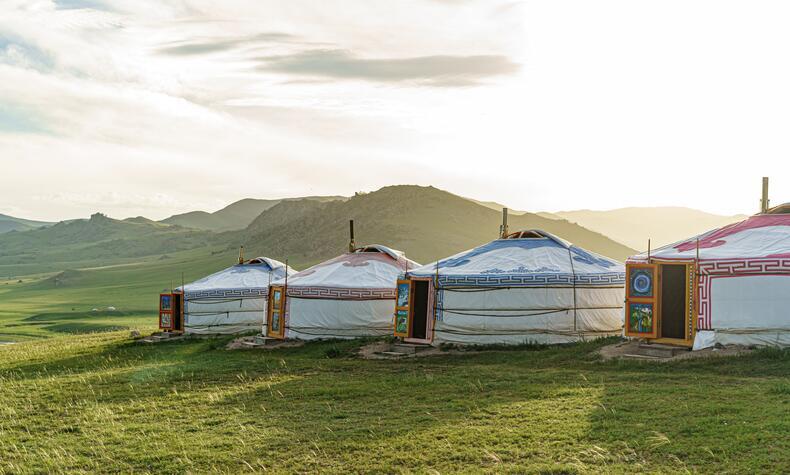
The Genghis Khan Retreat: Mongolia's Timeless Past
Deep in the Mongolian steppe, the Genghis Khan Retreat offers a timeless refuge of silence, wide-open space, and some of the world’s finest horsemen.
We are in the Pacific Ring of Fire, that planetary wound that runs along the edges of the ocean and turns Central America into a land of volcanoes, earthquakes, and fertile soil. Geography is not a backdrop here: it is the protagonist. More than thirty cones rise above its territory, some silent, others restless, and at least three stand in constant watch, reminding every inhabitant and traveler that the subsurface is a living force.
Volcán de Fuego is perhaps the most emblematic of all, a guardian standing at 3,763 meters whose presence is felt even from afar. Its eruptions are frequent, sometimes small explosions that send ash and roars into the sky, other times more violent, capable of forcing communities to evacuate and suspending daily life. In March 2025, it erupted with fury again, covering nearby villages with dark dust and forcing hundreds of families to leave their homes.
However, despite this latent threat, those who live in its shadow coexist with it with a mix of respect and resignation: the volcano destroys, but it also gives back, enriching the land with minerals that make it possible to grow corn, coffee, and tropical fruit.
A bit further south rises the Pacaya, at 2,552 meters, another restless volcano close to the capital. Its slopes are the setting for excursions where, with a guide, you can approach recent lava flows, feel the heat escaping from the cracks, and understand what it means to live on volcanic land. On clear nights, the incandescent glow descending its slopes illuminates the horizon with a beauty as dangerous as it is hypnotic.
In the western part of the country, the Santa María and Santiaguito complex shows another side of this restless geology. After the devastating eruption of 1902, which buried entire cities and left deep scars in the collective memory, the Santiaguito dome remains active, releasing gas and ash intermittently. It is a permanent reminder that the calm is only apparent, and that geological time and human time intersect dramatically.
Volcanoes are not just mountains: they are narrative and myth. Each one has its legend, its names in Mayan languages, its stories of gods spitting fire or sleeping beneath the earth. In Guatemala, geography blends with the sacred.
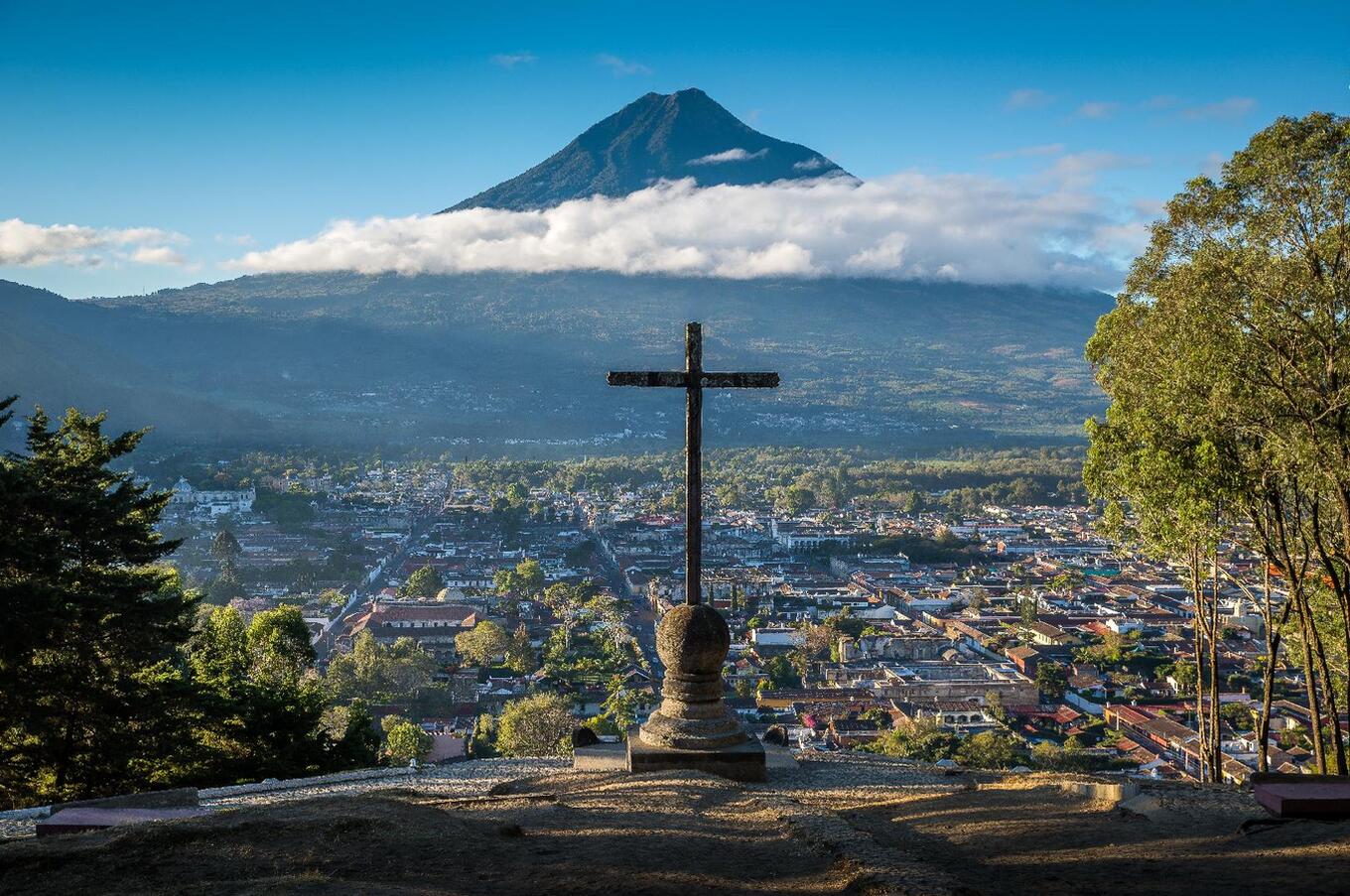
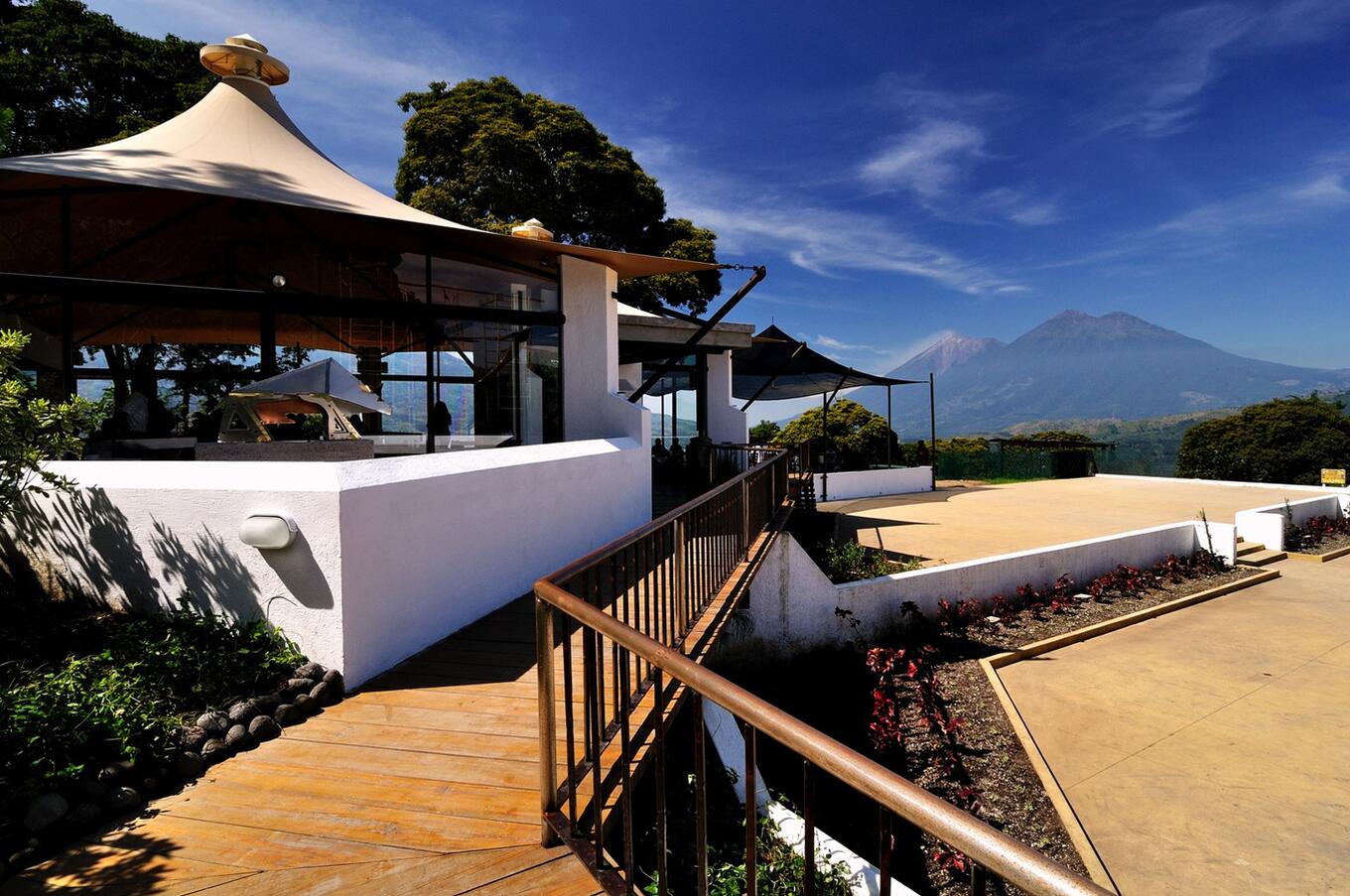
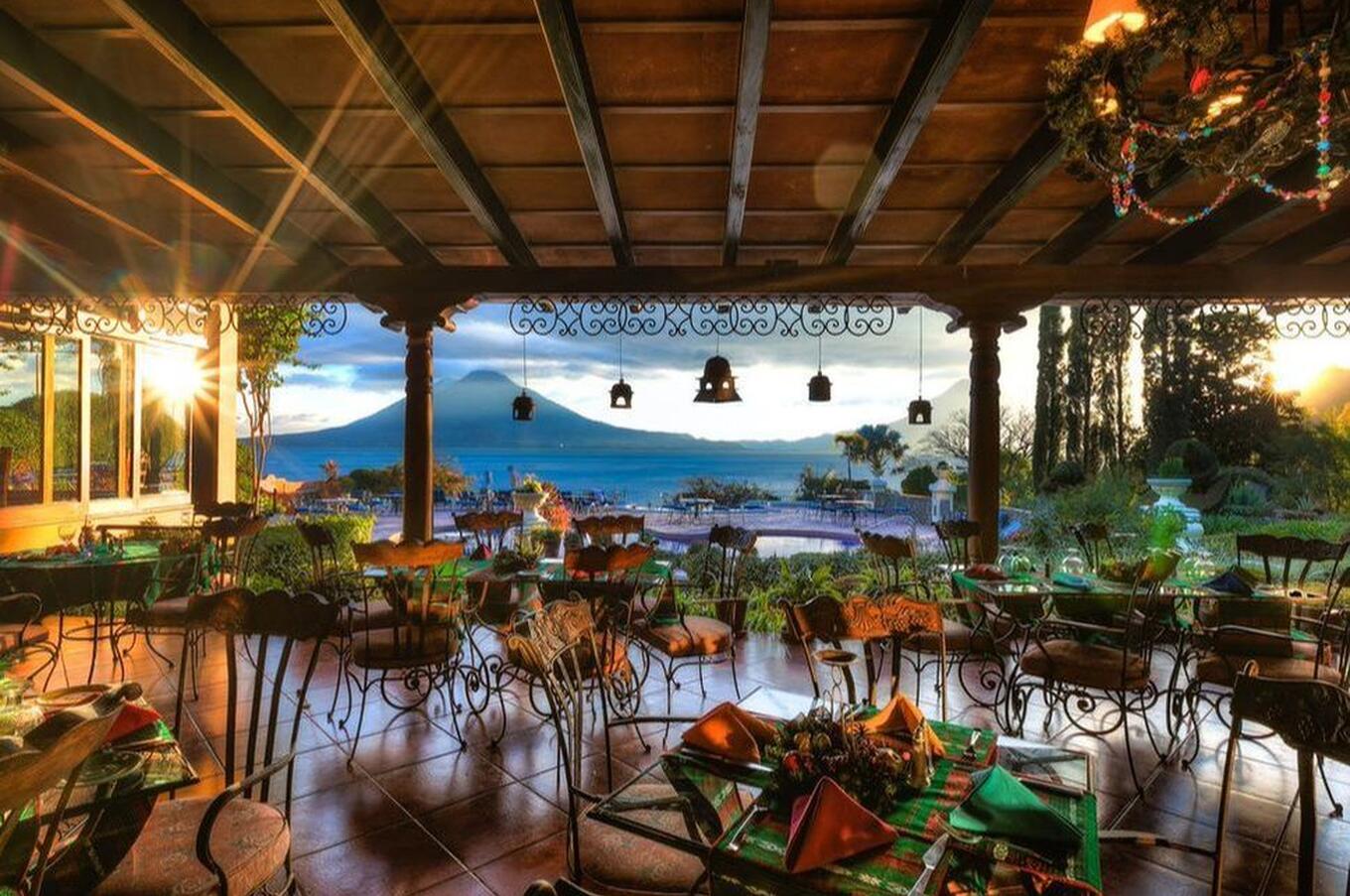
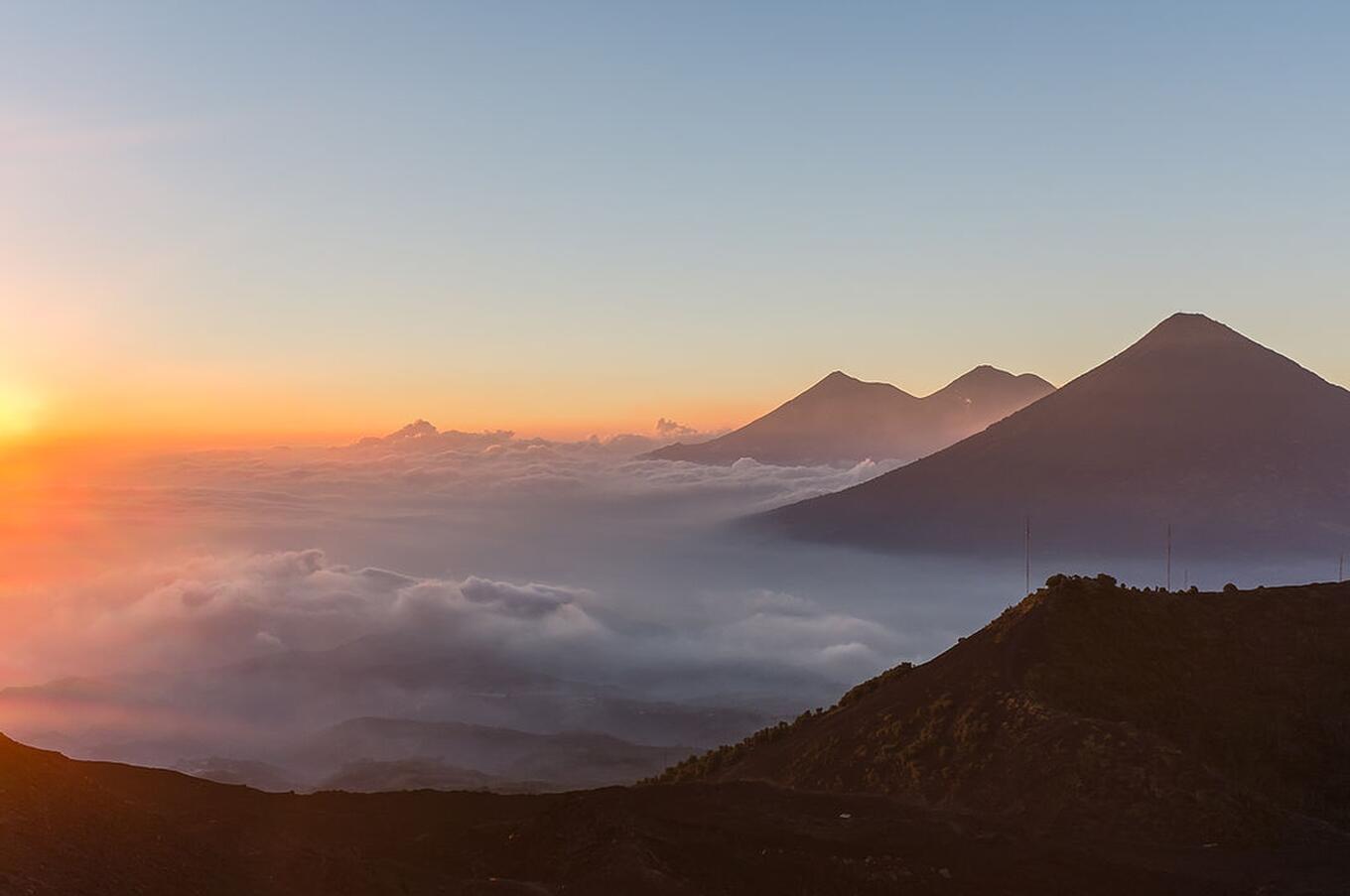
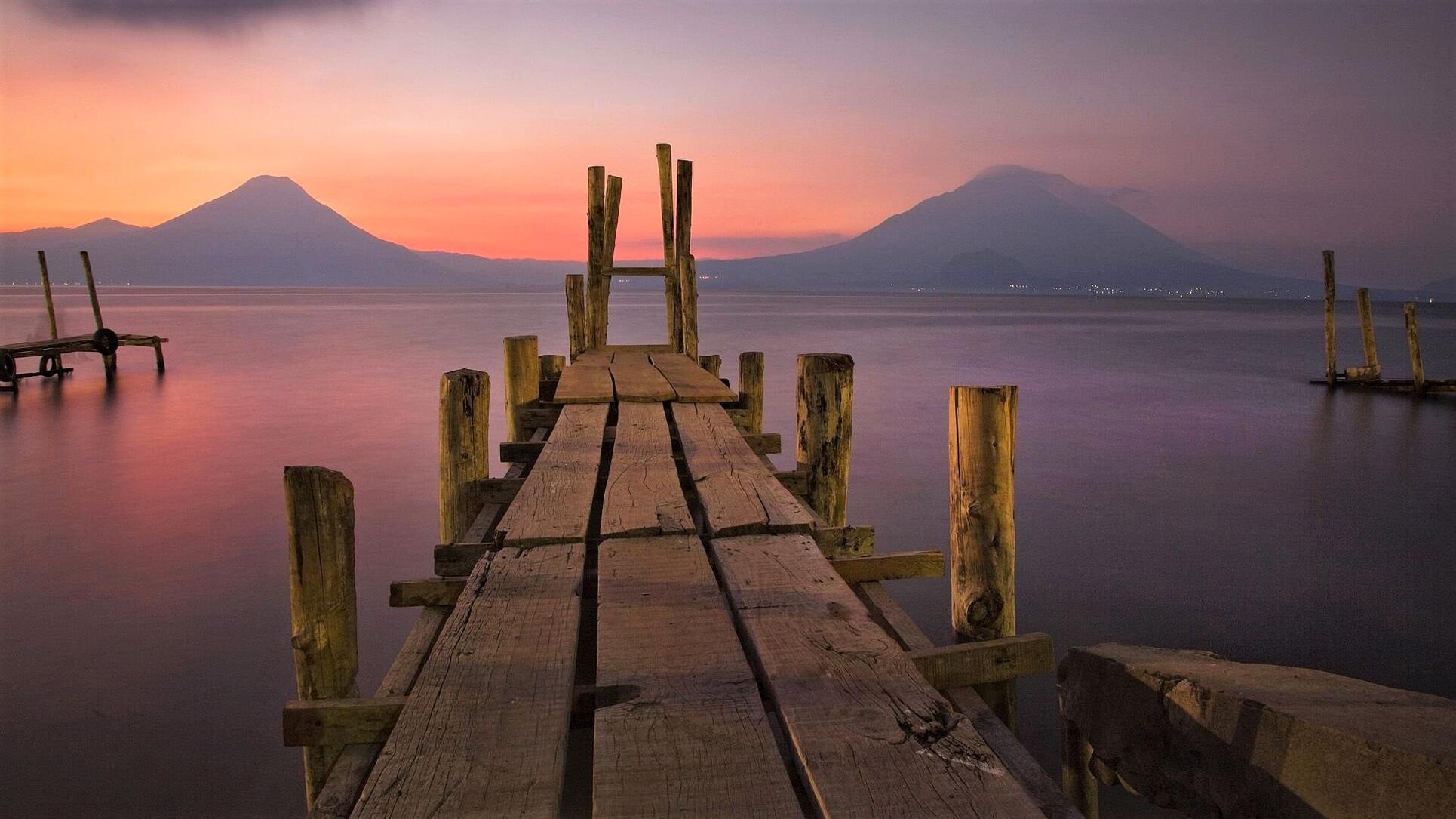
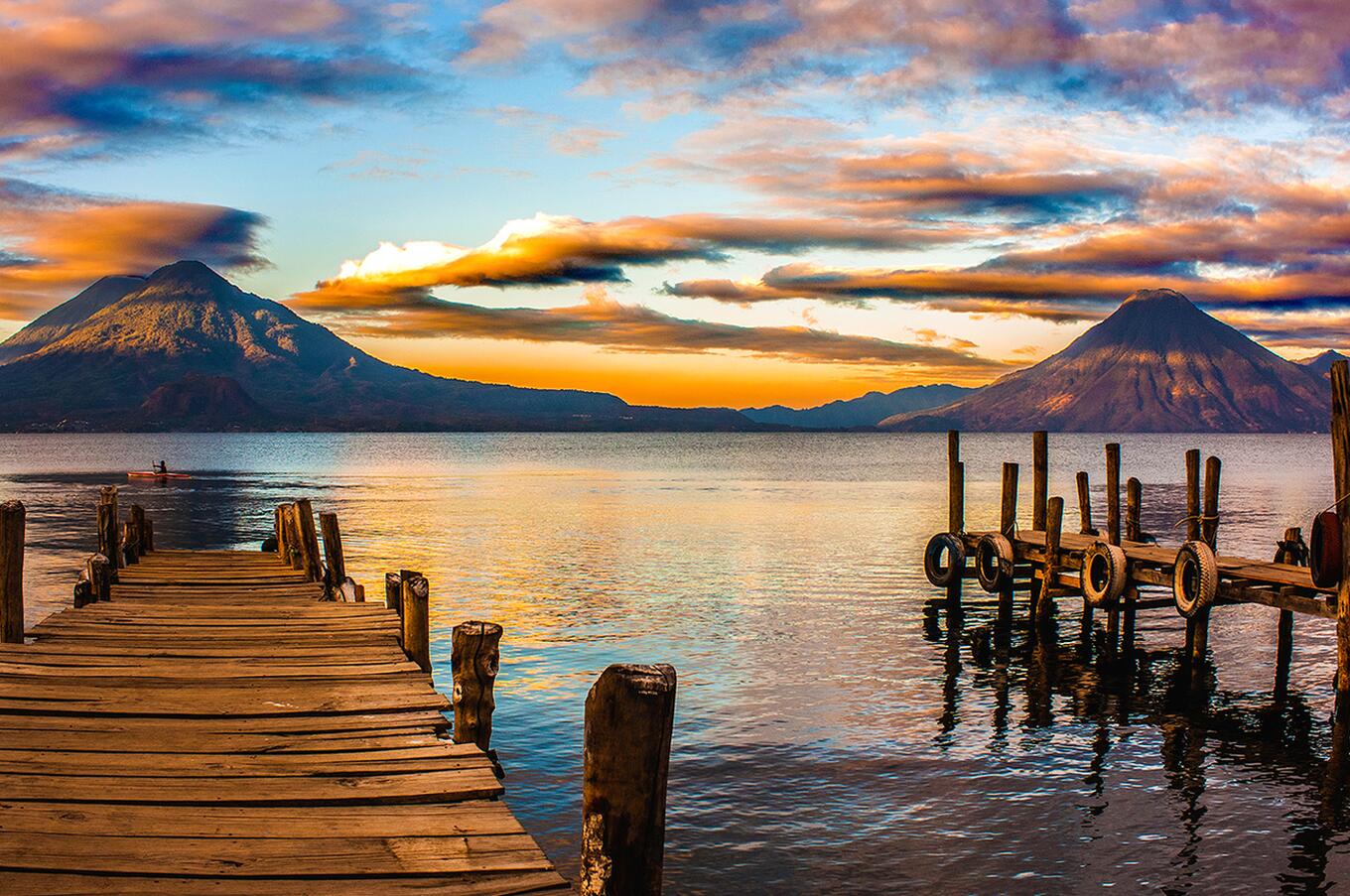
In the middle of this chain of giants, a jewel emerges that has nourished both science and literature: Lake Atitlán. At 1,560 meters above sea level, with a length of about 18 kilometers and depths reaching 340 meters, this lake occupies a volcanic caldera formed over 80,000 years ago. Its tectonic origin explains its intensely blue waters, the steep cliffs that surround it, and the volcanoes that guard it: Atitlán, Tolimán, and San Pedro, rising like a perfect triptych on the horizon.
Alexander von Humboldt described it as the most beautiful lake in the world, and later Aldous Huxley compared it to Lake Como in Italy, “but with additions, with colossal giants.” And it's true: the landscape resembles a painting where nature has chosen not to skimp on drama. The waters reflect volcanoes that turn red at sunrise, while Maya villages cling to the shores with their wooden docks, colorful markets, and daily rituals.
Guatemala sits on a convergence point between tectonic plates: the Caribbean plate and the Cocos plate, which slide under each other off the Pacific coast. This collision, known as subduction, is responsible for the country being part of the Pacific Ring of Fire, a belt that surrounds the ocean from South America to Japan and hosts over 75% of the world's active volcanoes.
More than thirty volcanoes have been identified in Guatemala, of which three remain active: Fuego, Pacaya, and Santiaguito. Seismic and volcanic activity is constant, but it is part of the natural balance that has shaped its landscape and fertilized its soils. Paradoxically, part of the country's beauty arises from this geological tension: young mountains, fertile valleys, and a landscape that seems ever in motion.
Do you want to discover other active volcanoes around the world?
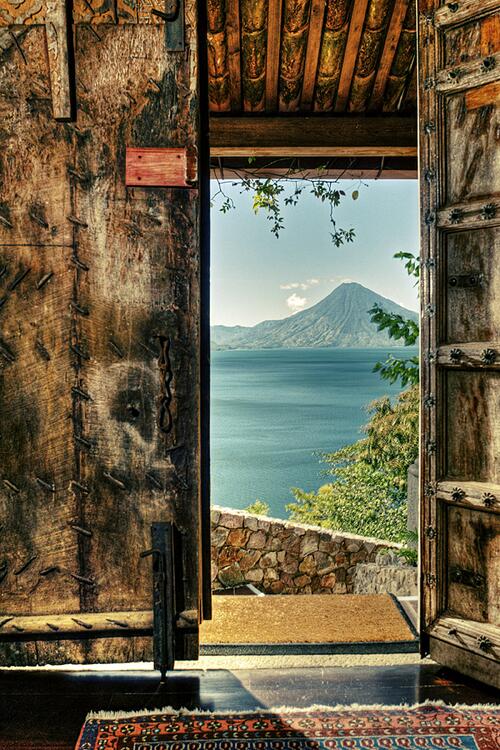
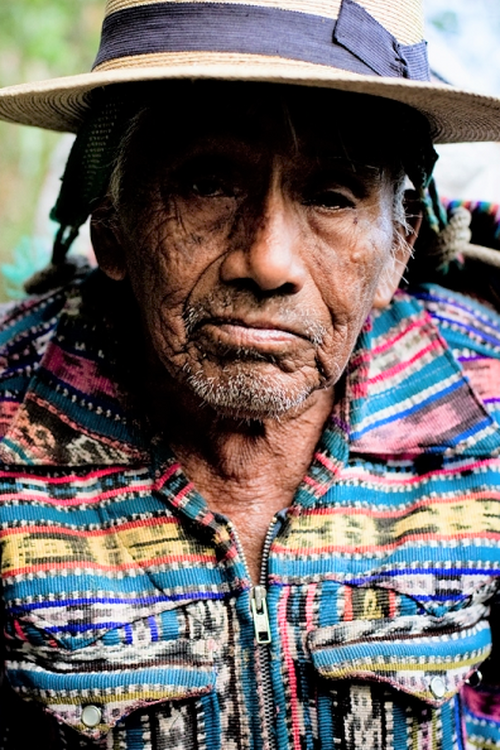
In the Mayan worldview, volcanoes are not just masses of rock but living beings. They are credited with will, character, and even moods. Some are considered guardians of the territory; others are seen as gateways between the visible world and the underworld.
The communities living around them venerate them with offerings of corn, incense, and liquor, asking for protection or rain. On special days, Mayan priests light ceremonial fires on the slopes, convinced that the volcano listens.
Fuego, Pacaya, or Atitlán are part of the same spiritual universe in which the earth breathes, speaks, and teaches. In this belief, as old as it is current, lies the deep relationship Guatemalans maintain with their landscape.
The Xocomil wind, which blows strongly in the afternoons, stirs the surface as if the lake were breathing. Locals say it takes away the sins of those who sail through it. This combination of myth and meteorology encapsulates the essence of Atitlán: a place where nature is both a rational explanation and a spiritual narrative.
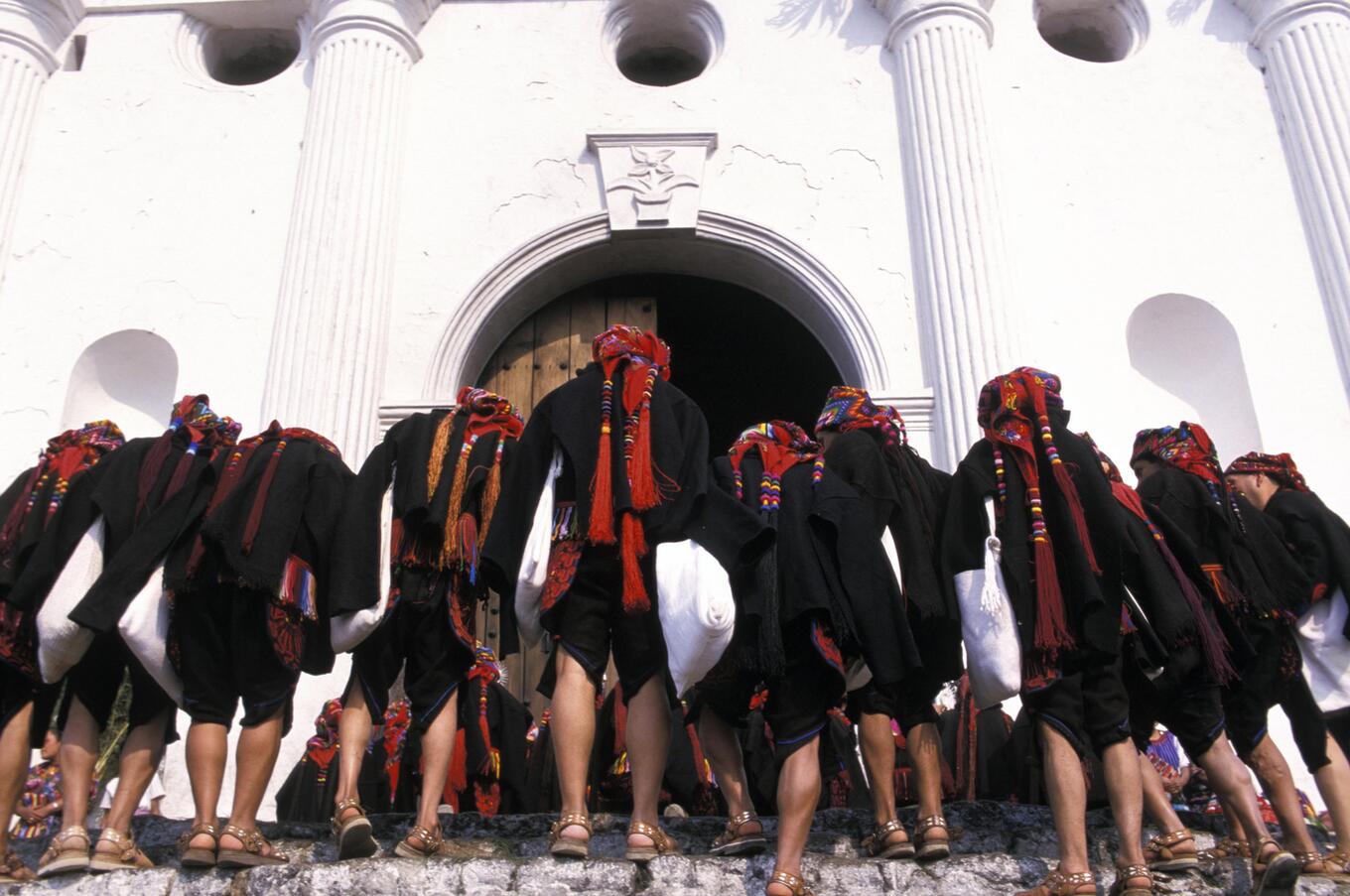
The villages surrounding the lake —San Juan, Santiago, Santa Catarina Palopó— are guardians of languages and fabrics that resist the homogenizing forces of the modern world. The Mayan world is not a frozen postcard or a recreation for tourists: it is real life, with markets that start before dawn, with women still dyeing cotton with natural pigments, with ceremonies held in front of makeshift altars on the shores.