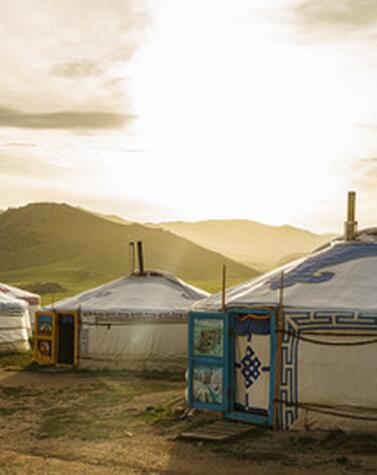
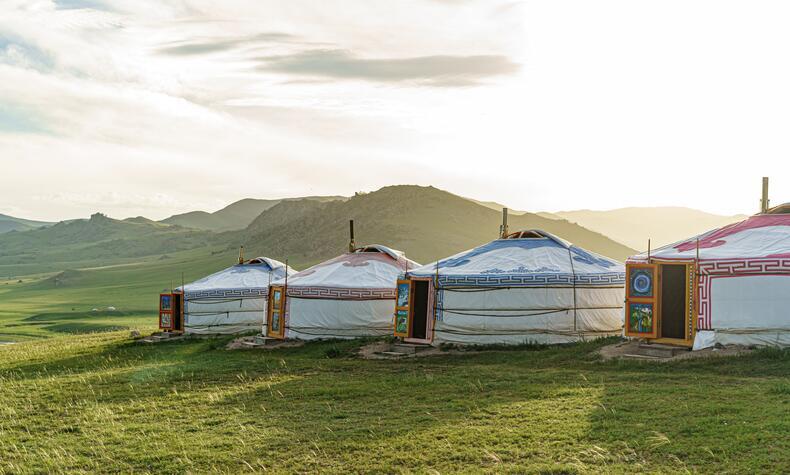
The Genghis Khan Retreat: Mongolia's Timeless Past
Deep in the Mongolian steppe, the Genghis Khan Retreat offers a timeless refuge of silence, wide-open space, and some of the world’s finest horsemen.
When the name "Congo" is mentioned, many imagine a convulsive country, marked by headlines of violence and conflict. But there are two Congos, and they could not be more different. In contrast to the media chaos of the Democratic Republic of Congo (with its capital in Kinshasa), the small and quiet Republic of Congo, also known as Congo-Brazzaville, is a nation of peace, stability, and hospitality that goes unnoticed, and to the latter we have traveled to delve into a world as yet unexplored.
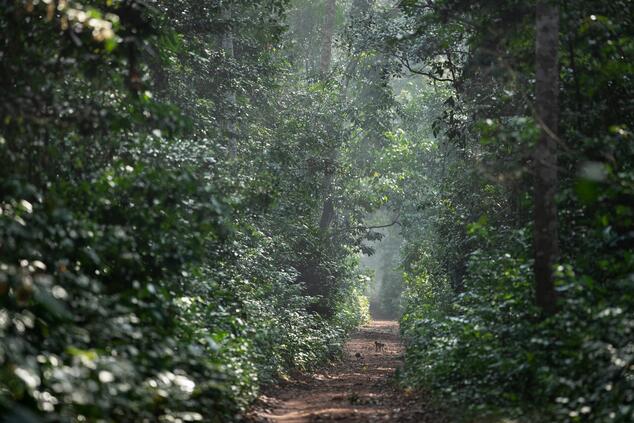
Located on the right bank of the Congo River, this French-speaking country is one of the hidden gems of the African continent. It is not a land of safaris or vast plains teeming with lions. Here, the main character is the tropical rainforest, its humidity, and the intact pulse of nature barely touched by humans.
Formerly a French colony, Congo-Brazzaville gained its independence in 1960. Its capital, Brazzaville, feels more Caribbean than African: laid-back, with wide avenues, markets filled with colorful fabrics, and a corniche offering views over the river to Kinshasa, its neighbor and opposite. It is the only place in the world where two capital cities face each other from opposite banks of the same river.
French heritage permeates the language, the mostly Christian religion, the cuisine, and the architecture. Still, it has also left a lingering connection to Europe that, despite its remote location, makes this country a surprisingly culturally accessible place for the Western traveler.
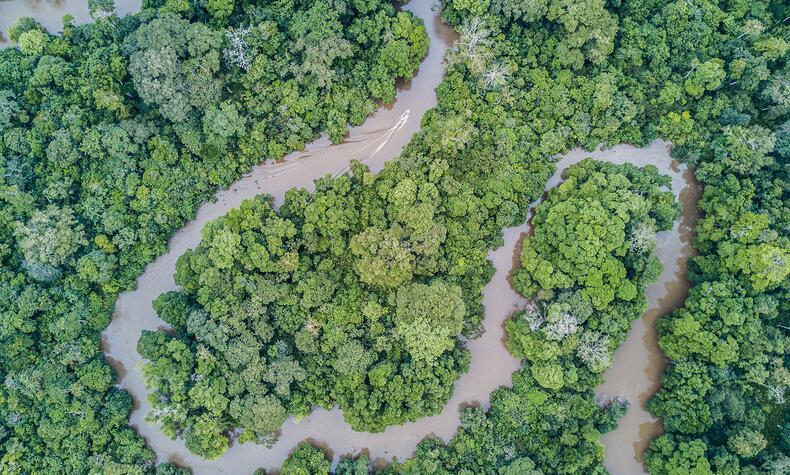
The Congo River is the second-longest river on the continent and one of the most abundant ecosystems on the planet. More than a geographical feature, it is a universe in itself, with flooded jungle regions, alluvial plains, and areas so remote that they have not yet been explored or scientifically catalogued.
The Republic of Congo is the size of Germany and has a total population of 6.1 million people, the equivalent of a European capital city. Sixty percent of the country is totally covered by virgin forest and swamps, and most of its areas are inaccessible, making its biodiversity largely undiscovered. Hundreds of plant species, insects, and fish have not yet been classified by science. The Congo River basin hosts dwarf crocodiles, electric fish, and freshwater dolphins, amongst others. On its shores, gorillas, chimpanzees, bonobos, forest elephants, and bongos roam freely
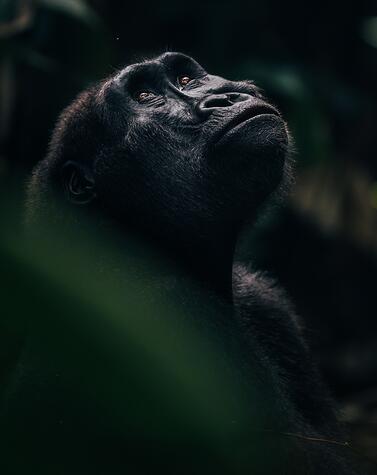
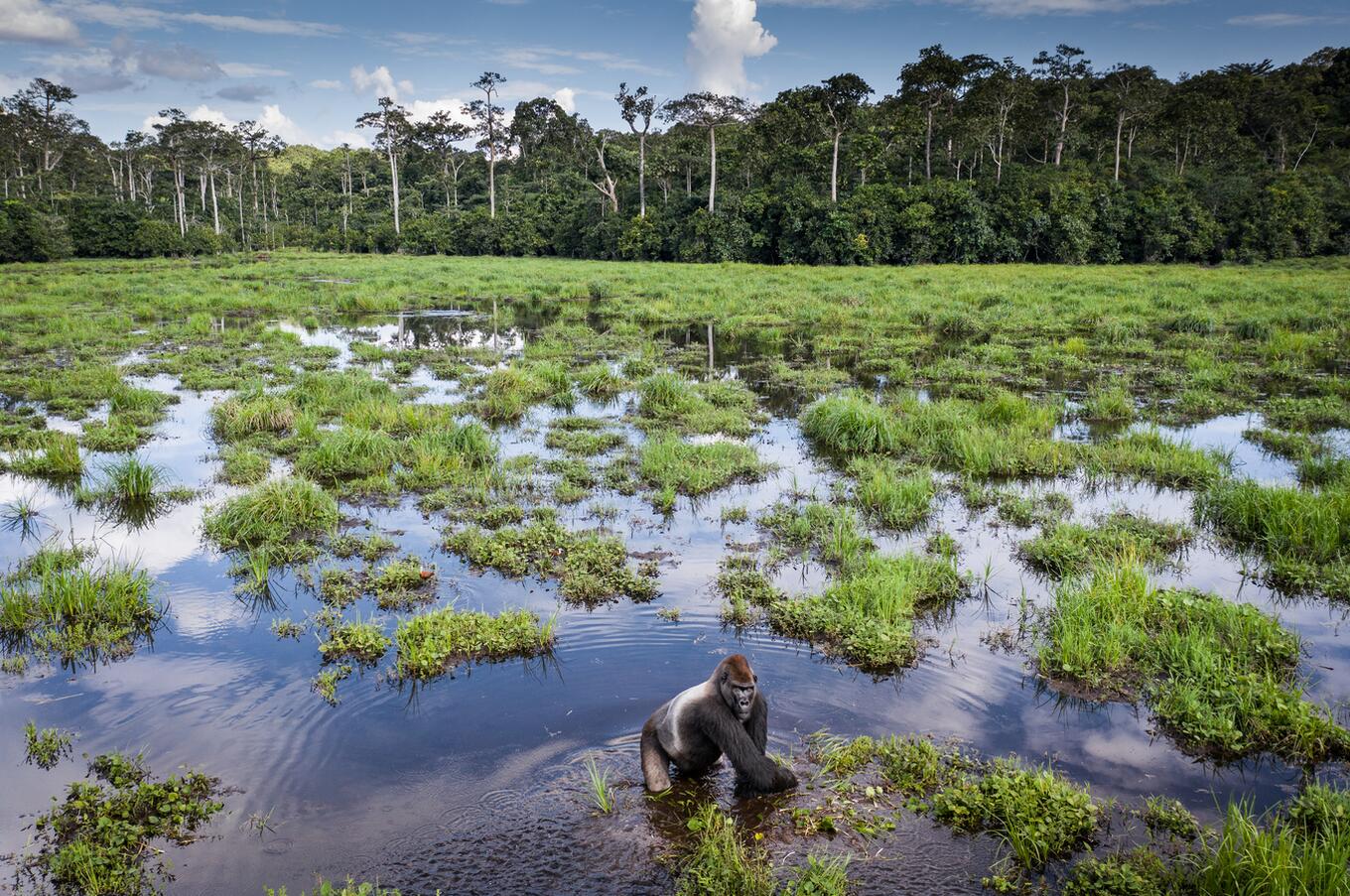
While destinations like Rwanda and Uganda attract more than 50,000 visitors a year each to observe mountain gorillas - with numbers in some parks reaching 100 tourists a day - in Odzala, the story is very different. Only an average of 250 travelers visit its jungles and come face to face with lowland gorillas each year. This difference not only speaks of exclusivity: it speaks of a type travel that privileges silence, patience, and deep respect for the environment.
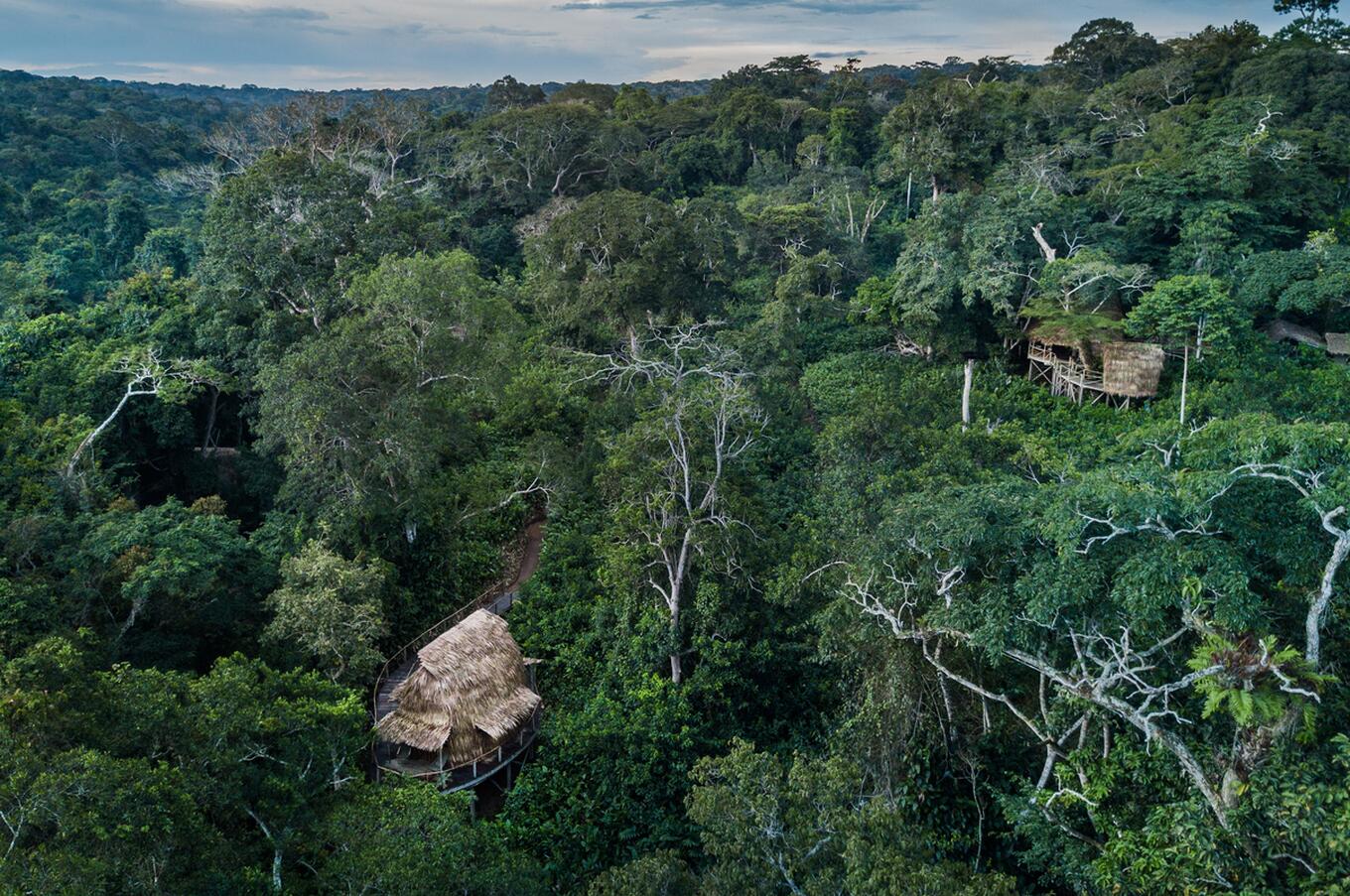
In the heart of the rainforest, lies the Odzala-Kokoua National Park, one of the oldest rainforests in Africa and also one of the least modified by humans. Unlike other African reserves, Odzala has no tourist overcrowding, no commercial airstrips, and no tourists following the "big five" trail. In this park, the size of Belgium, there is simply nothing of that.
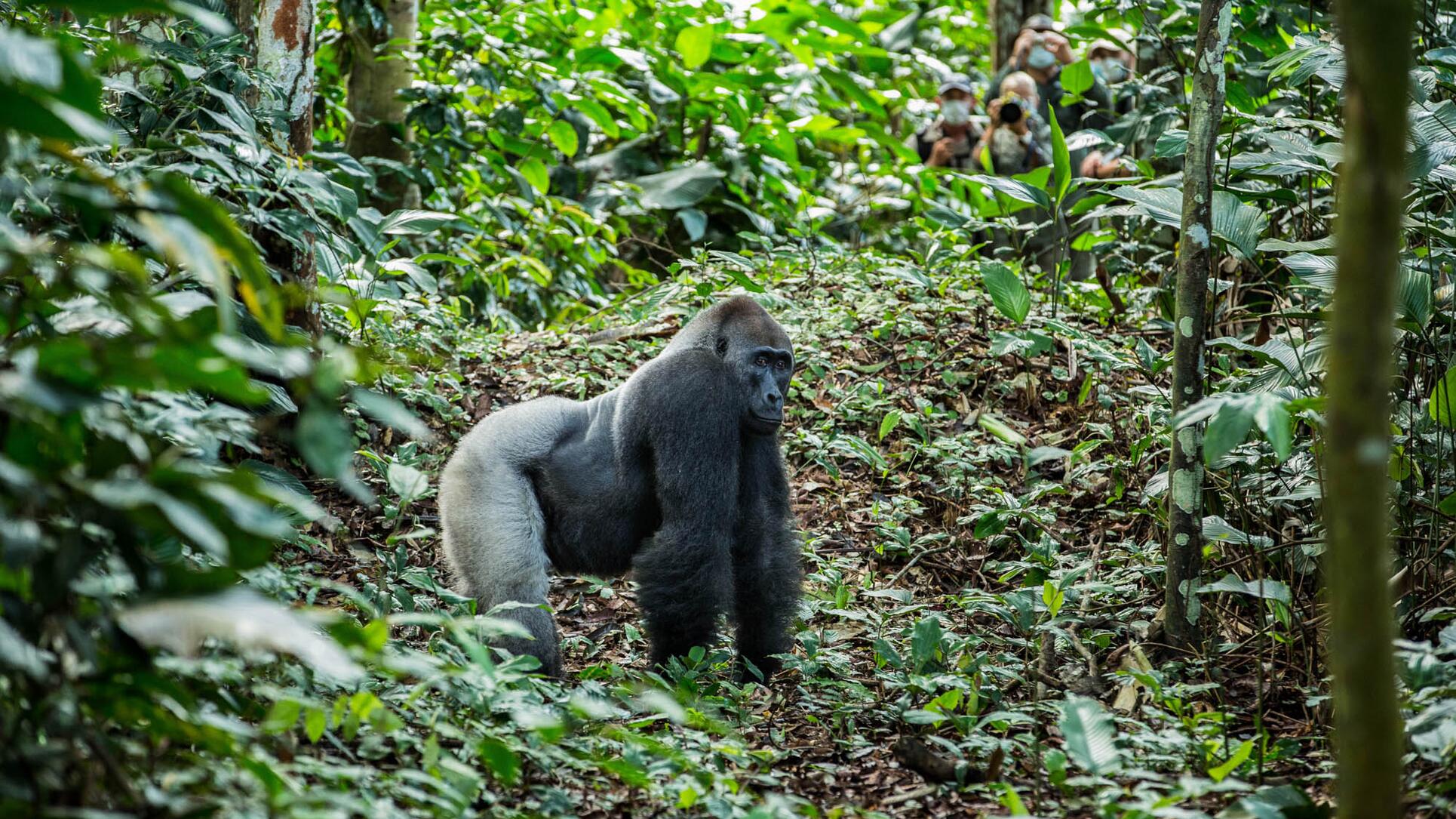
Odzala is also a sanctuary and one of the last refuges of the western lowland gorilla, a critically endangered species, which has managed to habituate to human presence in a very different way than it did in Uganda and Rwanda, thanks to the pioneering work of Spanish primatologist Magdalena Bermejo. She was the first anthropologist in the world to habituate a lowland gorilla family, opening a new path for their study, protection, and conservation. Her work has made Odzala a world reference center in primatology and an example of how well-managed tourism can be a positive tool for science and sustainability. Here, in total silence, only groups of four people visit a few gorilla families per day, compared to groups of 10 to 12 people in other regions of Africa.
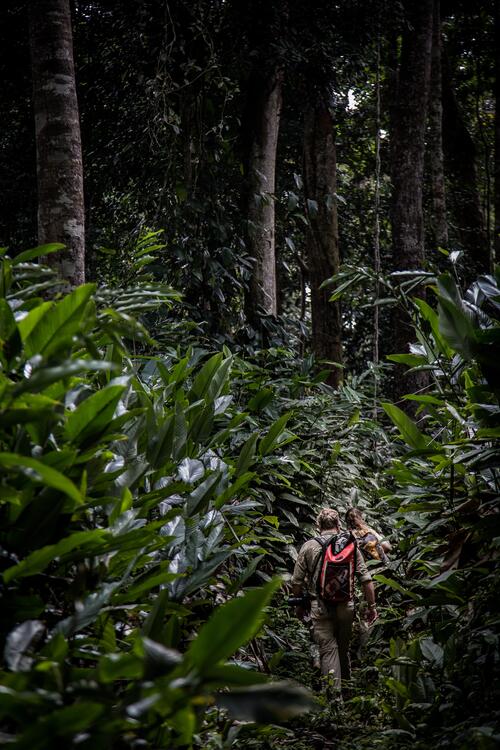
The trek is not easy. It demands patience, resistance to heat and mud, and above all, a willingness to disappear into the vegetation. But when, after hours of tracking, a figure is perceived among the ferns - black, powerful, motionless - the world stops, and the observer is observed. Making eye contact with a gorilla for one second is enough to understand why the journey here is not just one more trip: it is a privilege.
The park is also home to forest elephants, more elusive and smaller than their savannah relatives; as well as chimpanzees, bonobos, and other primate species that live in this complex ecosystem, ranging from swampy baïs to dark forests that never see the sunlight, completely covered by a dense canopy. The diversity and quantity of birds are also extraordinary, with more than a thousand bird species recorded just in the Congo Basin to date.
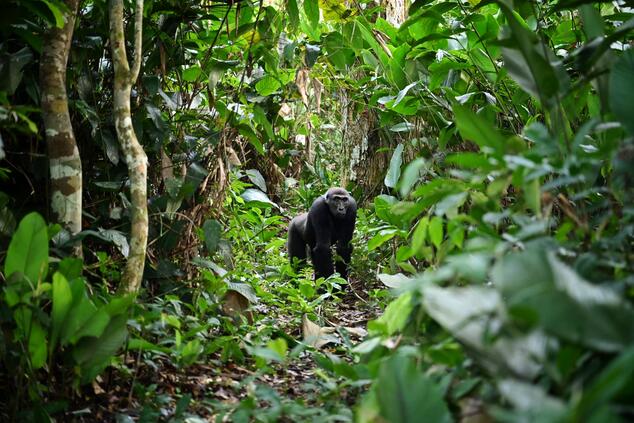
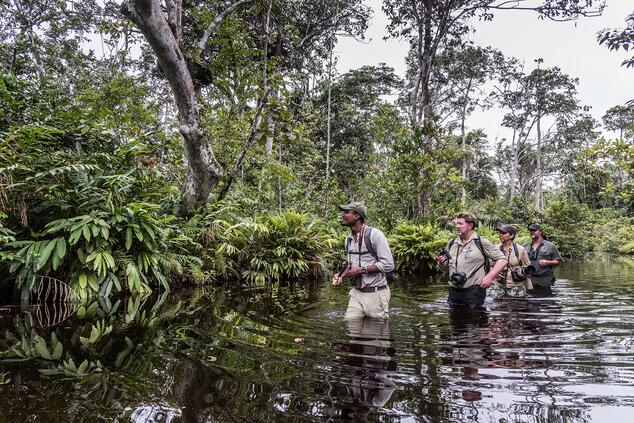
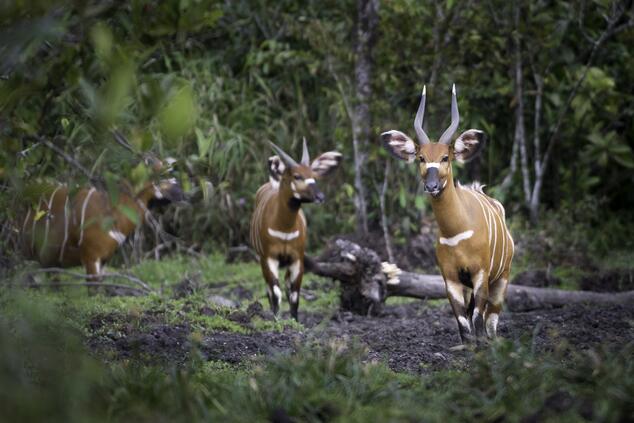
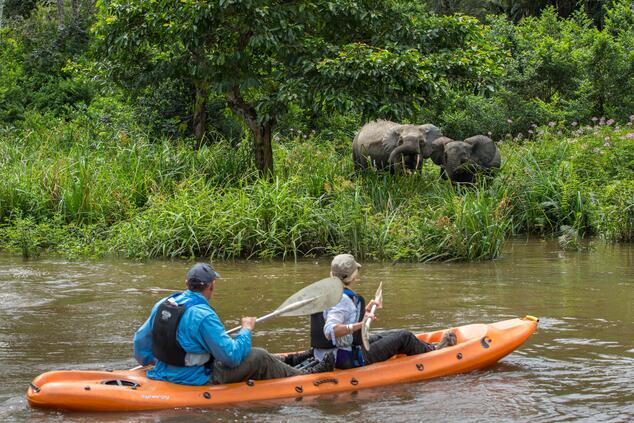
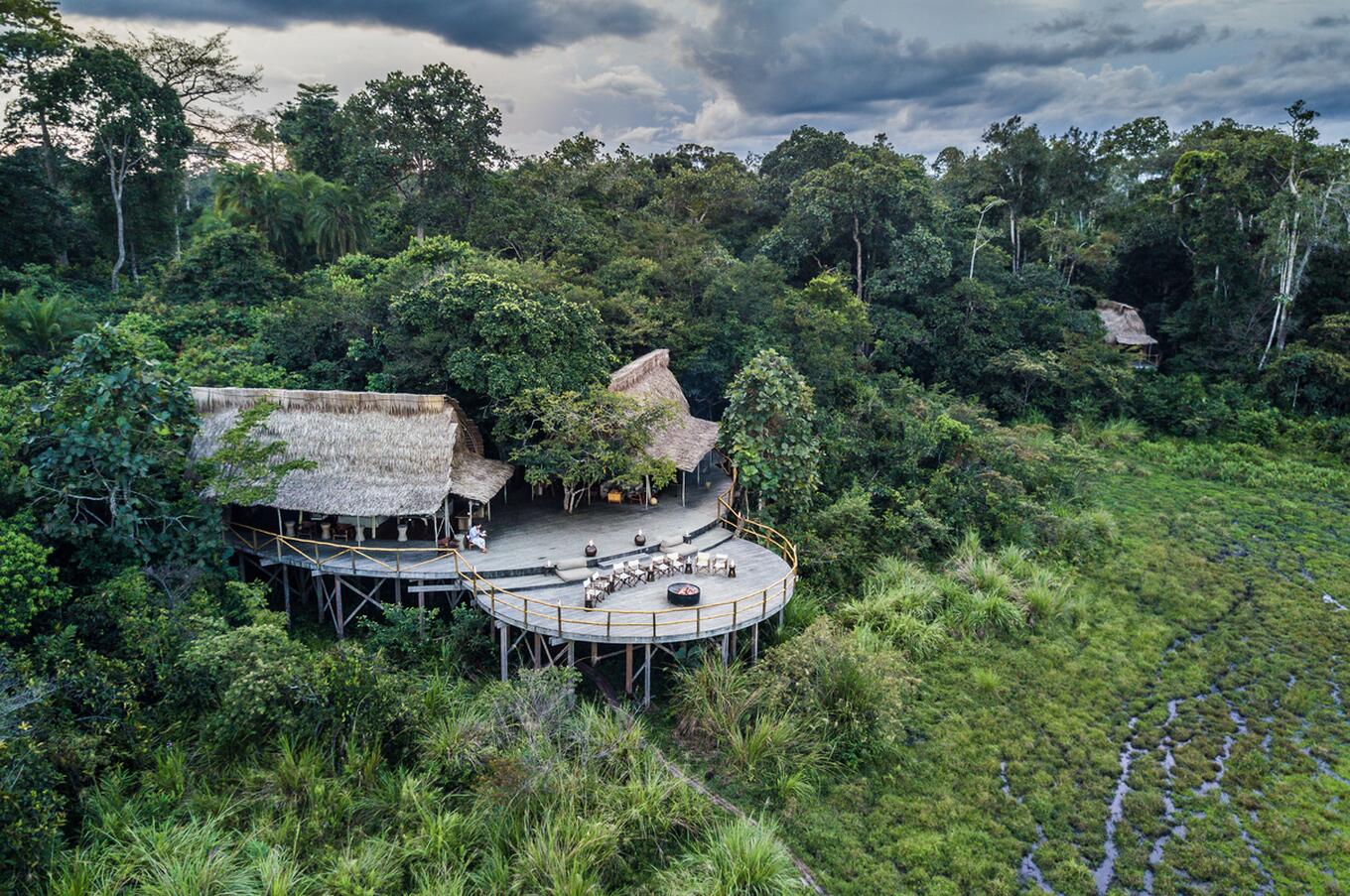
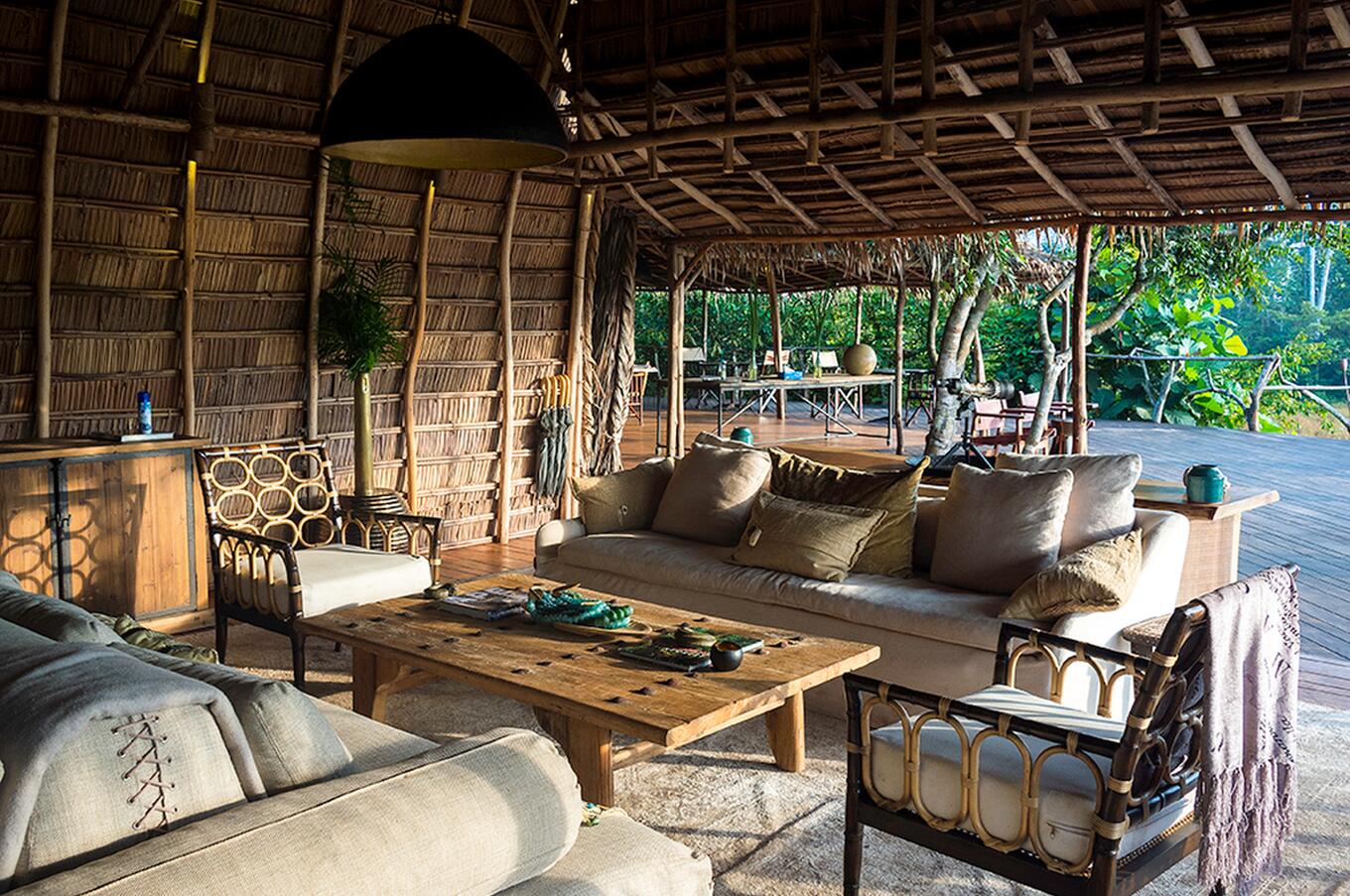
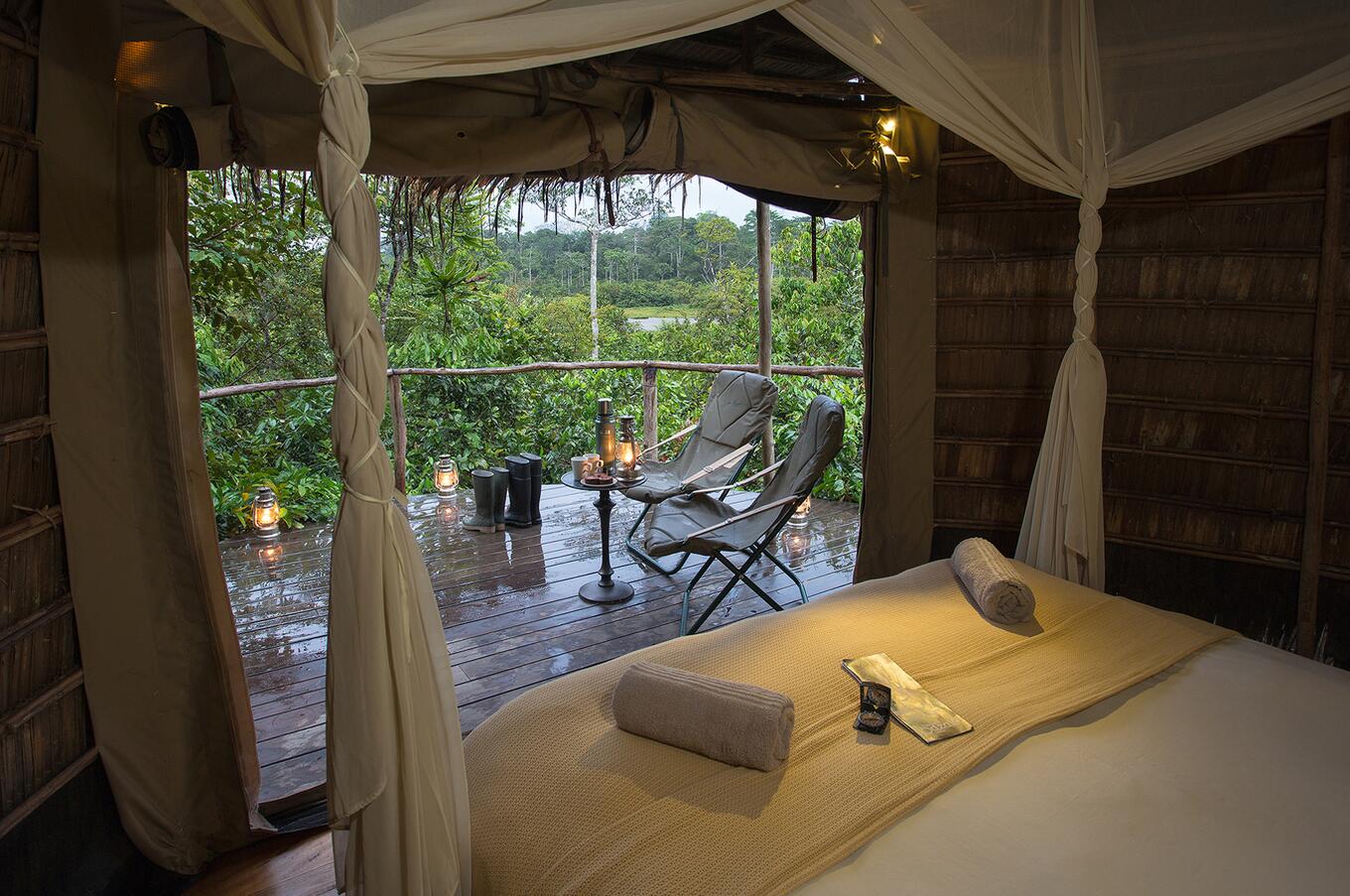
The experience is divided between the only three luxury camps in the country, managed by the Kamba Conservation Society. A project that combines conservation, science, and responsible tourism. The camps - Ngaga, Lango, and Mboko - are designed to blend into the environment without altering it, and offer travelers the chance to explore the Congo Basin in a respectful and immersive way. More than a journey, it is a journey in which the visitor becomes, if only for a few days, part of an ecosystem that continues to function according to its own rules. It is a safari like no other in Africa and one of the most extraordinary adventures we can ever live, since to go to meet gorillas, elephants, or chimpanzees, you have to go on foot or with the water to the waist at some points
Traveling to Odzala is not about sightseeing. It is to peek into an ancient version of the world that existed before us, where rules we have not yet written down still exist. In this untouched corner of Central Africa, there is no massification, no signs, no certainties. Only paths opened by the steps of an elephant or a fresh footprint on the bank of a river.
Here, the forest is not to be visited: it is to be entered. What you find inside is not always seen, but felt. A different silence, a shared look with a wild gorilla, the certainty of having been part - if only for a few days - of something bigger, older, and deeply fragile.
It is in that gesture of walking in silence, of looking without demanding, when the journey becomes an act of listening. And in times where everything around us seems to have been discovered, Congo reminds us that there are still jungles that have not been told.