Jim Thompson: The Last Shadow of Thailand's Silk Spy
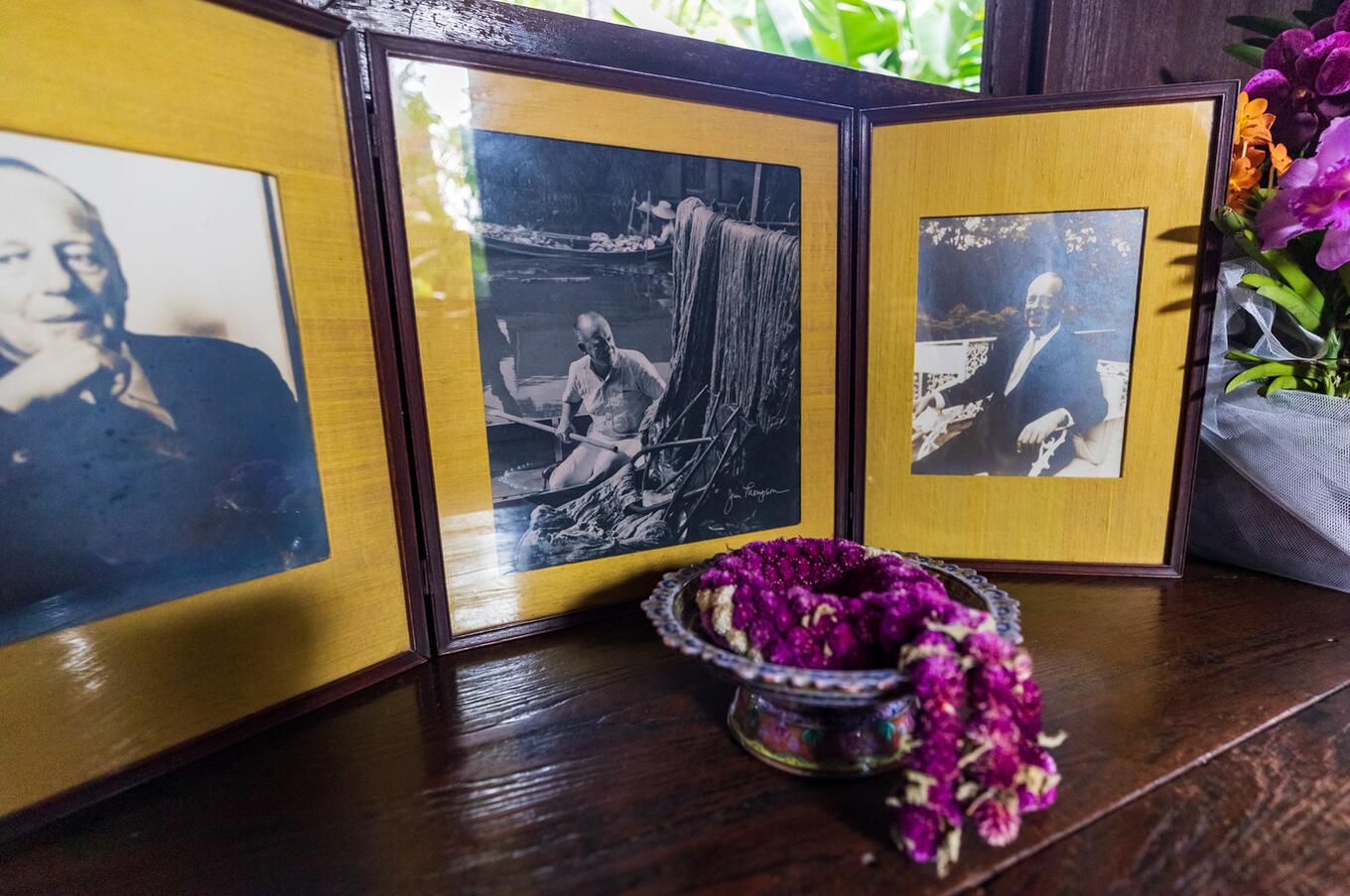
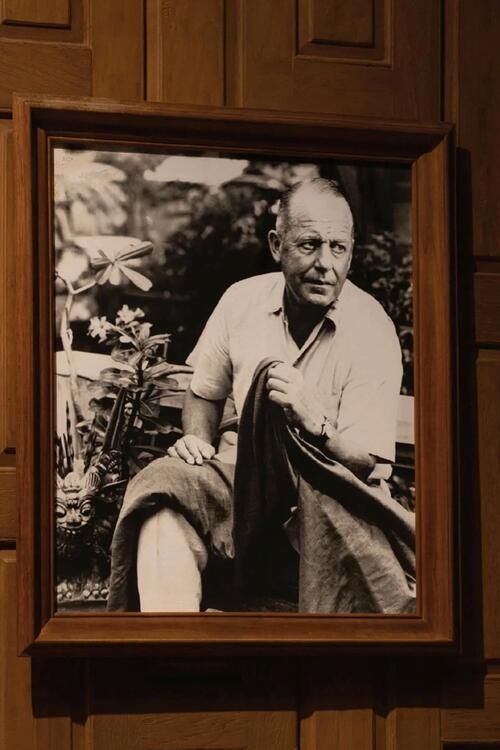
Before he was the master of Thai silk, Jim Thompson was an architect, soldier, diplomat, collector, and intelligence agent.
When Jim Thompson arrived in Bangkok in 1945, Thailand was still a country in transition. World War II had just ended, and although it had nominally been an ally of Japan, its role during the conflict had been ambiguous. The country was not devastated, but it was suspended between modernization and tradition, between historical isolation and inevitable openness to the world.
It was in this context that Jim Thompson appeared. Tall, refined, with a privileged education and mild manners, Thompson was no tourist. Nor was he a diplomat. He was a former Princeton architect turned intelligence officer. He had served in the Office of Strategic Services (OSS), forerunner of the CIA, with assignments in North Africa, Europe, and eventually Asia. He was assigned liaison and observation duties during the latter stages of the conflict.
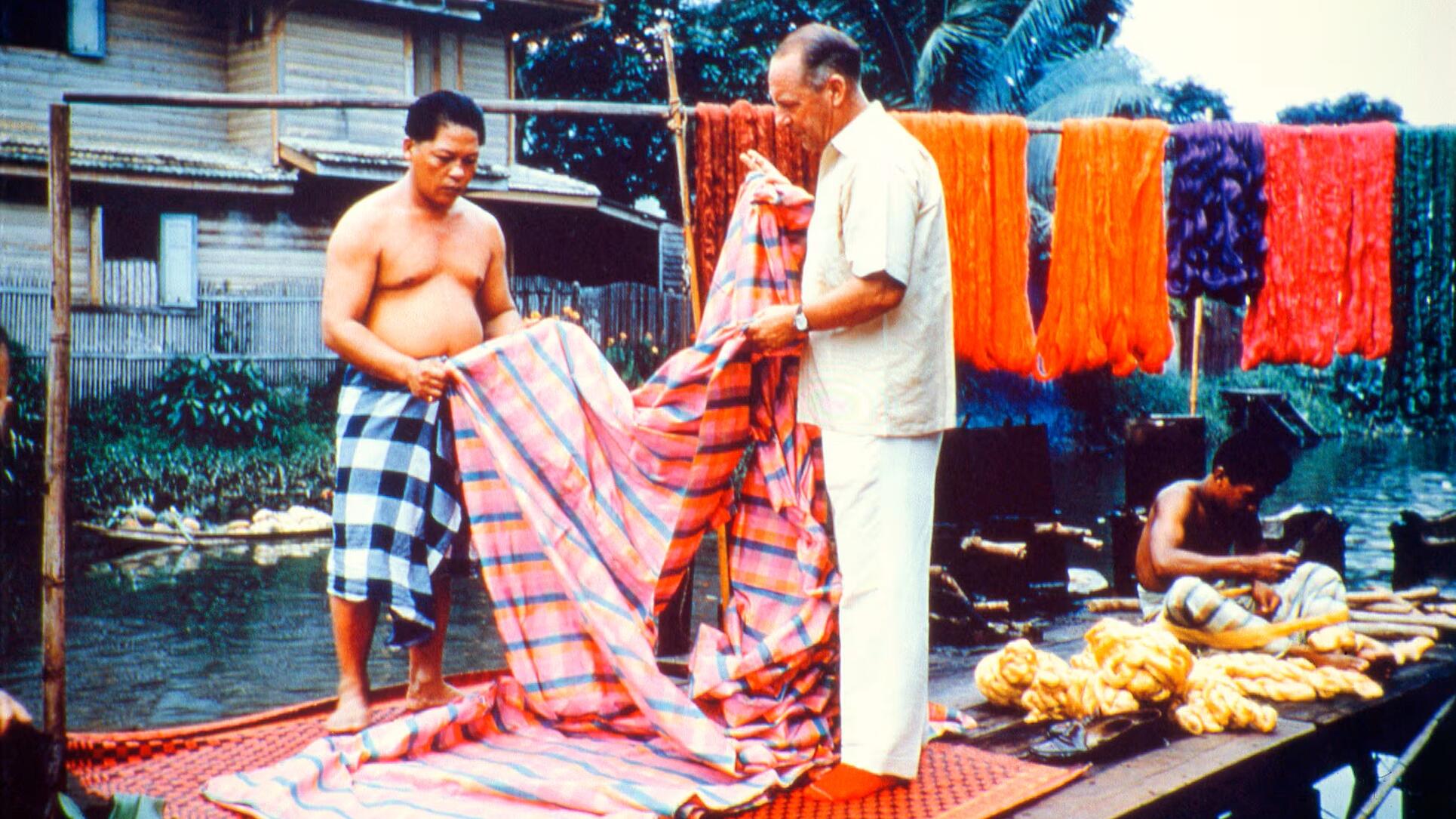
He was 39 years old when he first set foot in the kingdom of Siam. Unlike many of his colleagues, he did not return to Washington or to a diplomatic career. He settled in Bangkok, learned the language, interacted with local artists and artisans, and began to take an interest in the country's architectural and textile heritage. It was that outside but sensitive eye that enabled him to detect something the Thais themselves were letting slip away: the traditional craftsmanship of hand-woven silk.
Before becoming its great patron, Jim Thompson was many other things: a privileged observer of postwar Southeast Asia, an agent whose real activity is still not fully elucidated today, and a character whose life seems written for the movies. In fact, it has been said that Ian Fleming was partially inspired by him to profile his ideal agent: cultured, elegant, reserved, and with a double life difficult to decipher.
For several years, he maintained an ambiguous presence: well received in Thai power circles, but without belonging to them. He knew all the players in the new international order in Asia, but seemed to represent none of them. Meanwhile, he was preparing his next move: to save Thai silk from disappearing and turn it into a world art.
The day the jungle swallowed him
He was one of the most influential figures in postwar Bangkok. Then a walk up the mountain was enough to make him a legend.
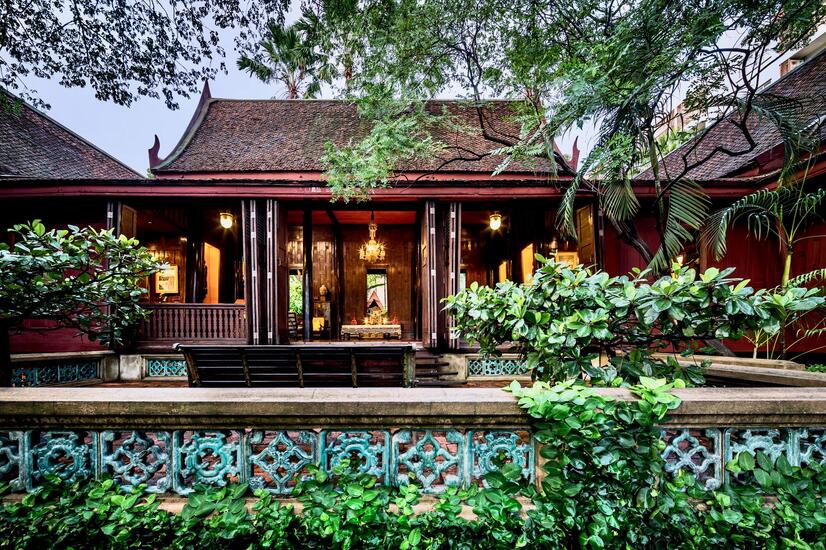
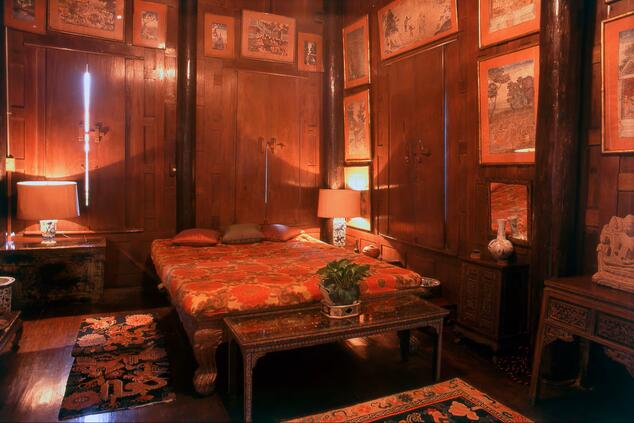
By 1967, Jim Thompson was more than a successful businessman. He had revived Thai silk, positioned it on the catwalks of Paris and New York, and his home had become a meeting place for diplomats, artists, and enlightened travelers. He lived surrounded by antiques, grew rare orchids, and, though officially retired from politics, remained a man surrounded by silences.
That same year, at 61, Thompson decided to take a few days off in the Cameron Highlands, a region of misty hills and ancient tea plantations in Malaysia. He was staying with friends in a colonial residence. On Sunday, March 26, after lunch, he went for a walk in the nearby forest. He never returned.
He left no note. There were no witnesses. No trace was found. His cap and walking stick also never turned up. One of the most extensive searches in Malaysian history began, with more than 500 soldiers, sniffer dogs, volunteers, and helicopters. There were no results.
His disappearance became a myth. The house closed temporarily. The international media made a case out of it. And Thailand, in disbelief, began to worship his ghost.
Theories about his disappearance multiplied. Here are some that still circulate:
- Political assassination: he would have known too much about cross-interests in the region.
- Kidnapping: by the Viet Cong or foreign secret services.
- Staged disappearance: a planned retreat to disappear from the map.
- Accident: a fall or encounter with wildlife in difficult terrain.
- Shamanic rite: a fringe theory that speaks of a spiritual quest.
What remains when a man disappears
Not all legacies are written with presence. Some are woven with silences, with preserved beauty, with the intuition that there are things that deserve to stay. Jim Thompson left no descendants, no confessions, no will with revelations. But his figure did not fade. The more time passes, the larger his shadow grows.
In Thailand, his story has become that of the foreigner who came not to conquer, but to guard. Who came not to teach, but to listen. And who saw in craftsmanship a form of art and national identity.
The James H. W. Thompson Foundation
Custodians of a history between art and mystery
After Jim Thompson's disappearance in 1967, his heirs and relatives formed a non-profit foundation with the aim of preserving his artistic, architectural, and cultural legacy. Thus was born the James H. W. Thompson Foundation, under the royal patronage of Princess Maha Chakri Sirindhorn.
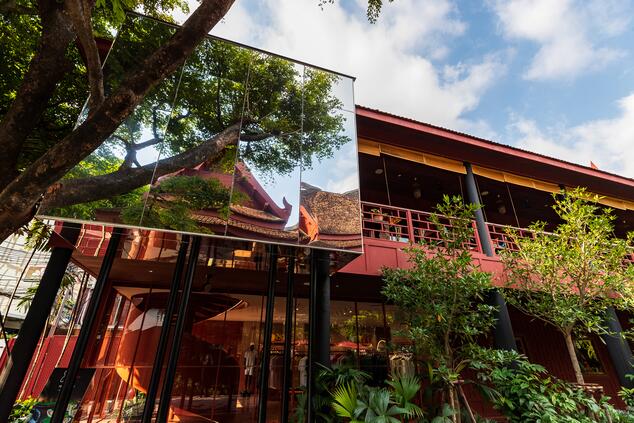
Based in Bangkok, the Foundation manages the Jim Thompson House Museum, curates a valuable collection of Southeast Asian art, and promotes programs of heritage conservation, research, and cultural education.
Beyond the myth, the Foundation has managed to keep the figure of Thompson alive not as a symbol of exoticism, but as a bridge between cultures and ideas. Visiting the house or studying its archives is today a way to dialogue with the modern history of Thailand, seen from the singular prism of a man who knew how to look deeply.
Between mulberry trees and memory
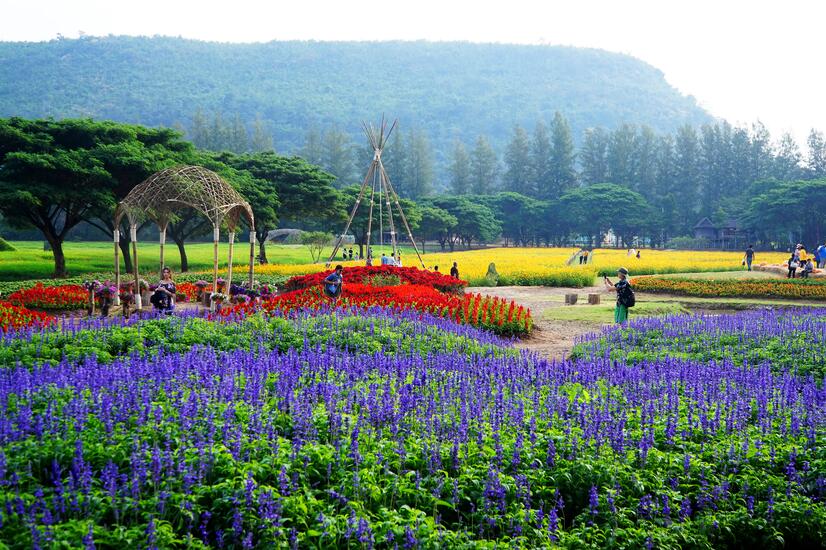
Located in the Pak Thong Chai district, northeast of Bangkok, the Jim Thompson Farm is a mulberry plantation that opens its gates to the public for a few weeks each winter, serving as an agricultural and cultural interpretation center. There, mulberry trees are cultivated, silkworms are raised, filaments are hand-spun in the traditional way, and fabrics are dyed with natural pigments, preserving techniques that have shaped the identity of the Isaan region for centuries. The farm also serves a heritage role: it protects local plant varieties, promotes rural architecture, and champions a model of sustainable agriculture. Along its paths, amid rice paddies and looms, visitors catch a glimpse of the same vision that guided Thompson in life: art as a way of preserving memory.
Today, to talk about Jim Thompson is not just to talk about silk. It is to speak of a way of looking. Of a silent respect for what seemed fragile. Of an architecture that protects, not imposes. Of an aesthetic that does not seek to dazzle, but to endure.
His house functions as a threshold: between the Bangkok that was and the one to come, between the modern traveler and the ancient nomad. It is a place of quiet beauty, of long shadows, of noble materials. It is also a metaphor: a man who dedicated his life to rescuing the ephemeral, and who ended up becoming invisible.
At a time when almost every journey aspires to visibility, Jim Thompson's story proposes the opposite: to disappear without disappearing. To be a memory without being a relic. To become a myth that teaches not answers, but questions.
Jim Thompson is gone. But he is. In the creaking of the boards of his house, in the vegetable colors of a loom, in the curiosity of those who arrive in Bangkok and end up, unwittingly, knocking at his door.
- The Jim Thompson House Museum is a must-see in Bangkok. —
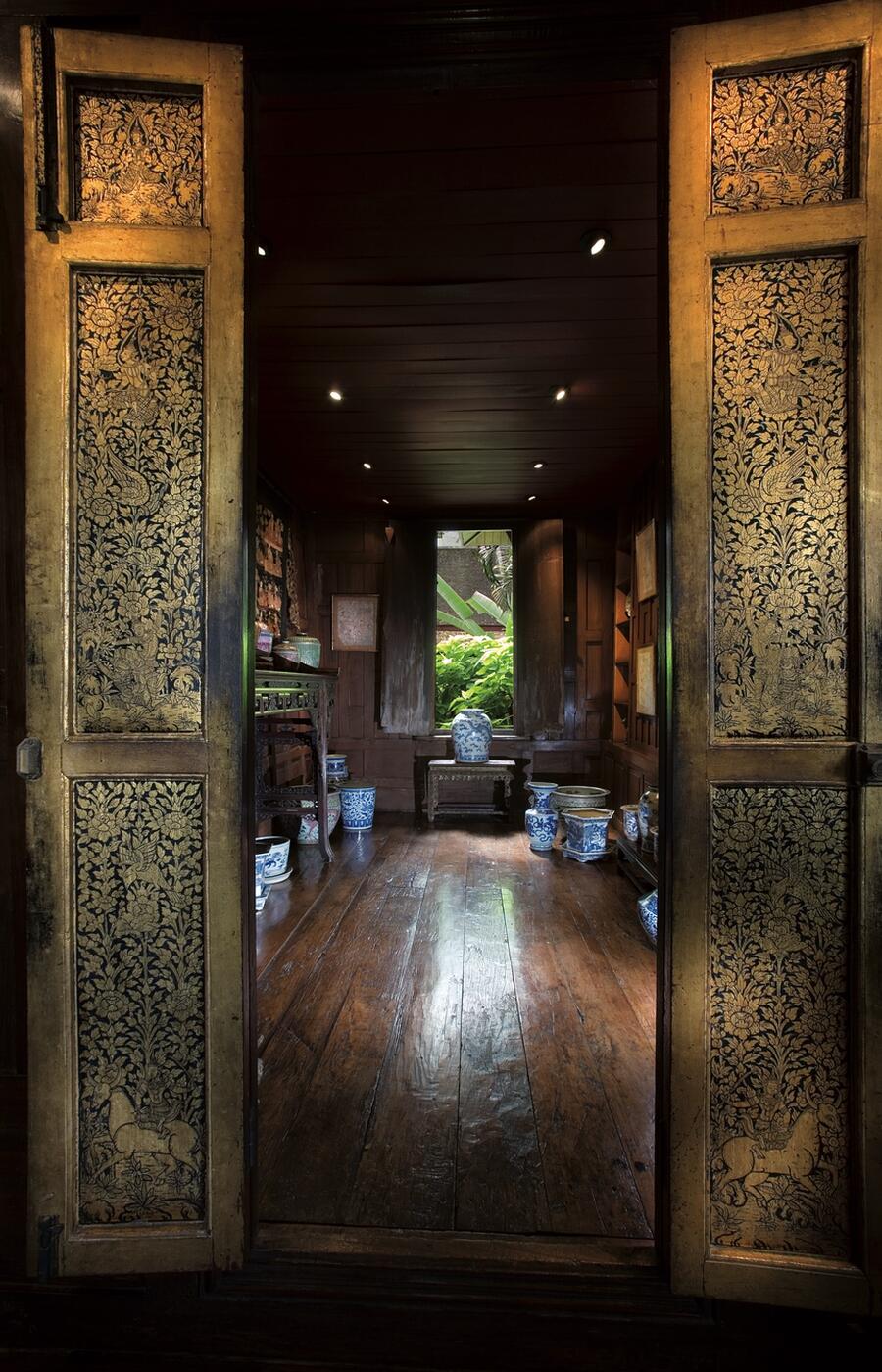
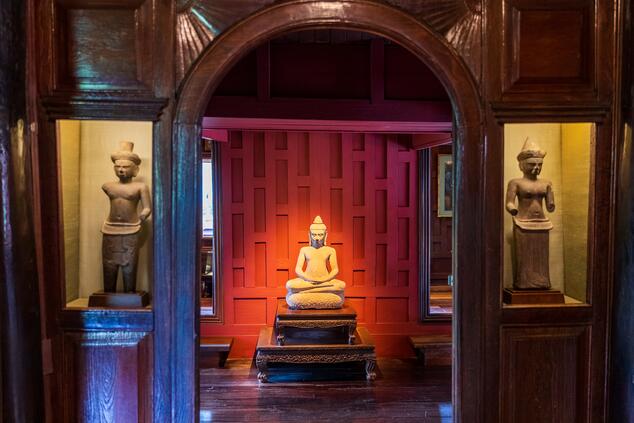
- The spy was one of the country's great art collectors. —
- At the time Jim Thompson began collecting them, traditional Thai paintings were on the verge of oblivion even in their own country. —
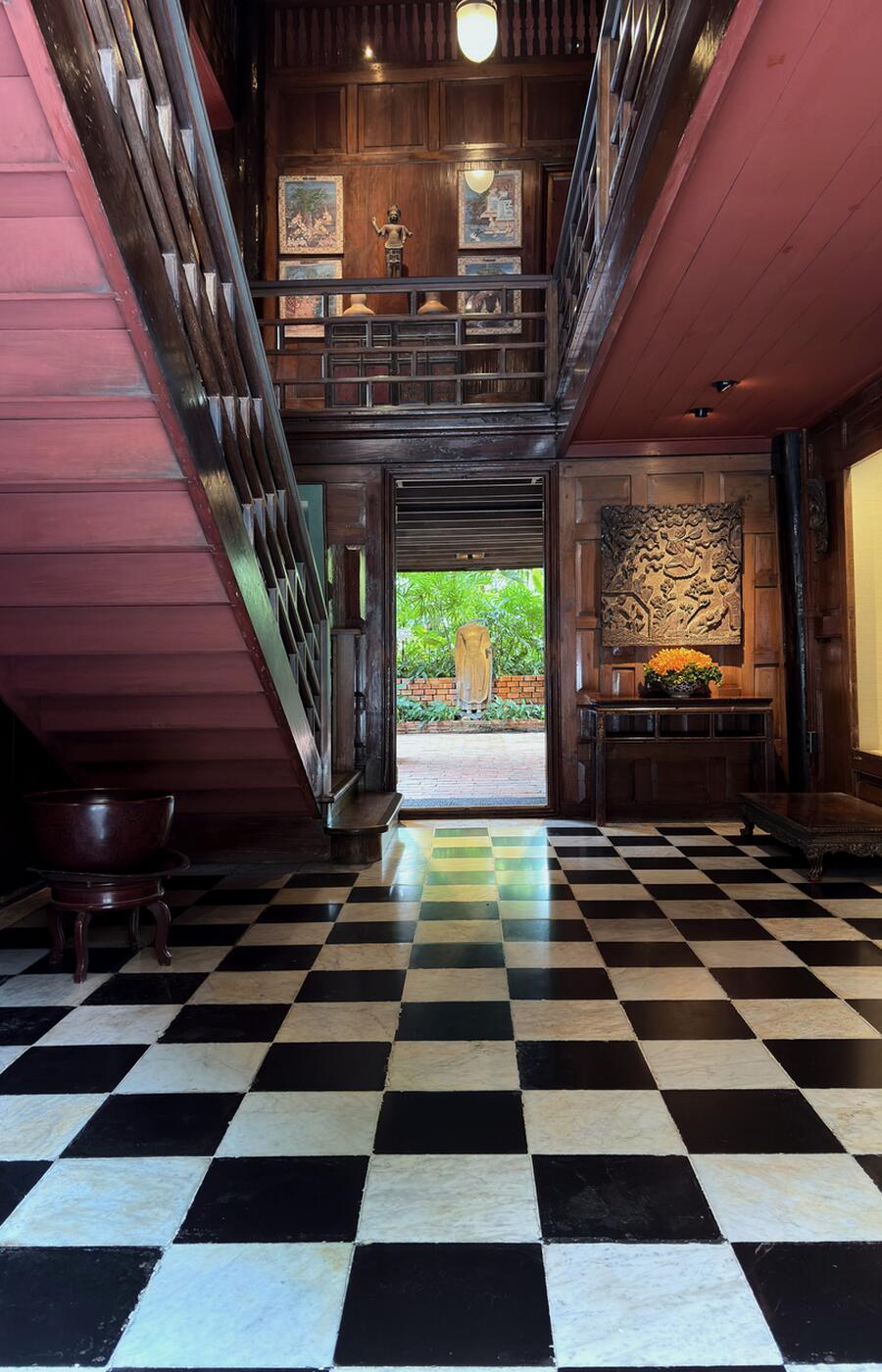
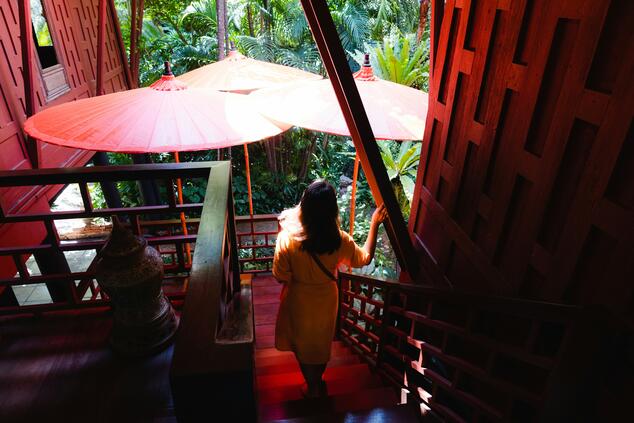
- Staircase leading to the gardens of the Jim Thompson House Museum. Photo: Unsplash CJ.