Iban Lopez Luna via Pexels: Ancient Japan
  • 10 MIN
  • Captivating

Ancient Japan: traditions that live on

Written by: Bernardo Fuertes

In Japan, the past is reconstructed, refined, presented, reenacted, and begins anew. It dwells in the restored wood of a temple, in the blade of a knife that requires constant care, in the preparation of a cup of tea, or in the movements that precede a sumo match.

Everything endures because each generation has agreed to repeat it and, in repeating it, to transform it. Time remains a craft. Workshops, kitchens, teahouses, ryokan, and settings where a seemingly simple action embodies centuries of knowledge. In Japan, a thousand years is the distance a gesture can travel when someone decides to teach it anew.

A relationship with time that also appears, in very different ways, in other parts of Asia, such as in the monasteries of Bhutan, where transmission remains an essential part of daily life.

The world's oldest ryokan opened in 705. The Nishiyama Onsen Keiunkan has been welcoming guests in Yamanashi Prefecture for more than thirteen centuries.
Nailiang

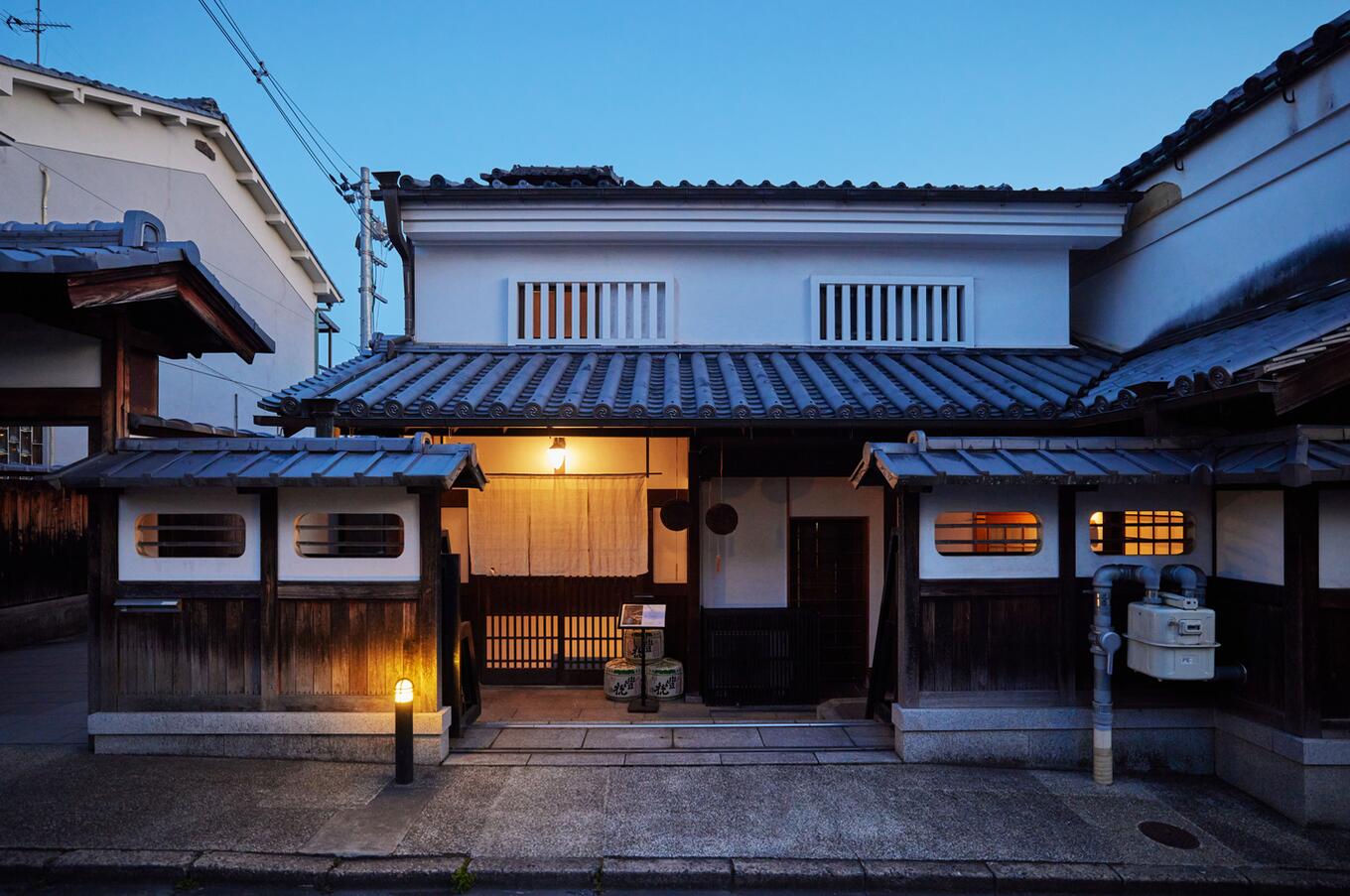
The room is almost empty when the guest arrives. A tatami floor, a low table, a few cushions, and an alcove with flowers or calligraphy. Hours later, while the guest is having dinner or using the bathroom, the space changes: the table disappears, futons take over the floor, and the living room becomes a bedroom. The next morning, the process is reversed.

This capacity for transformation encapsulates the logic of the ryokan. Sliding doors connect or separate spaces, closets conceal the bedding, and the tatami even serves as a unit of measurement for the room.

Some ryokan have maintained a continuity that is hard to imagine. The Nishiyama Onsen Keiunkan, in Yamanashi Prefecture, opened in the year 705 and is recognized as the oldest operating hotel in the world. It has survived wars, fires, earthquakes, and social changes, even though its buildings have had to be renovated many times.

In a ryokan, “conserving” means preserving a way of welcoming guests. Slippers are placed facing the exit, tea is served at the right temperature, dinner features seasonal ingredients, and the futon is made up before the guest returns.

Everything seems simple because complexity has been carefully removed from the picture. A concept of luxury very close to the one we explored in Luxury after the noise: less accumulation and more time, attention, and experience.

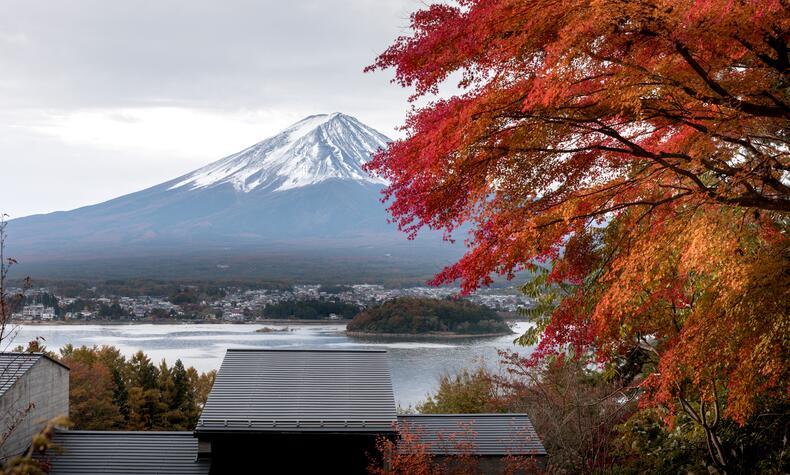
Hoshinoya Fuji
Views from Hoshinoya Fuji in the fall.
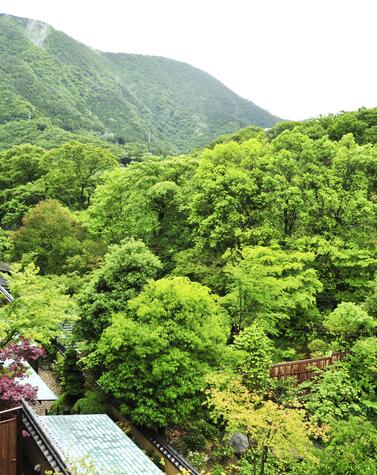
Hoshinoya Fuji
Maple trees and deciduous forests surround the ryokans in the Japanese mountains.
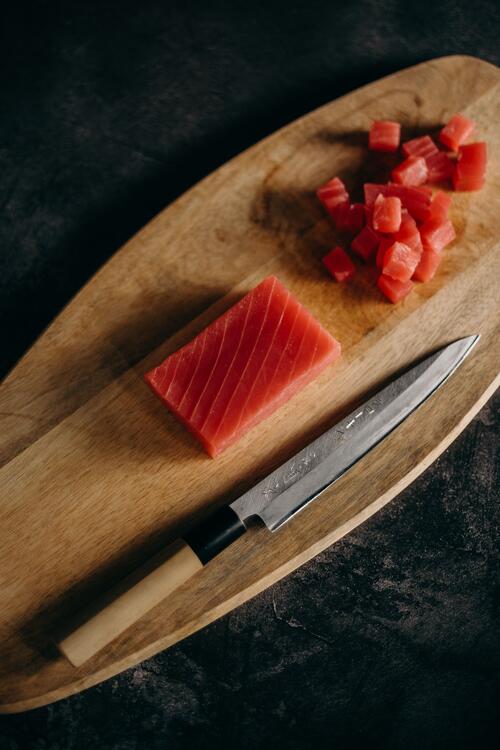
Sakai knives owe part of their history to Portuguese tobacco. In the 16th century, local artisans developed specialized knives to cut the leaves with precision.

Before becoming a staple of Japanese cuisine, the Sakai knife was used to cut tobacco. The city already had a tradition of metalworking when, in the 16th century, tobacco—which had been introduced to Japan by the Portuguese—began to be cultivated throughout the archipelago. Its leaves required fine cuts, and local artisans developed specialized knives to work with them.

During the Edo period, the government authorized those knives to bear the Sakai Kiwame seal, a mark certifying their superior quality. The product was protected as a monopoly, and its fame spread throughout Japan. Long before chefs began seeking out knives there, Sakai was already known for the sharpness of its tobacco blades.

Its manufacturing process has another distinctive feature: a knife may be the work of several master craftsmen. One heats and hammers the metal; another shapes and sharpens the blade; a third attaches the handle. Each phase requires different skills and can be carried out in separate workshops.

No two knives that appear the same are ever identical. Length, thickness, balance, and cutting angle can be adjusted to the millimeter depending on the hand and the work of the person who will use them.

The continuity of these blades does not depend on exactly replicating an object, but rather on keeping alive a chain of knowledge and skilled hands capable of transforming it.

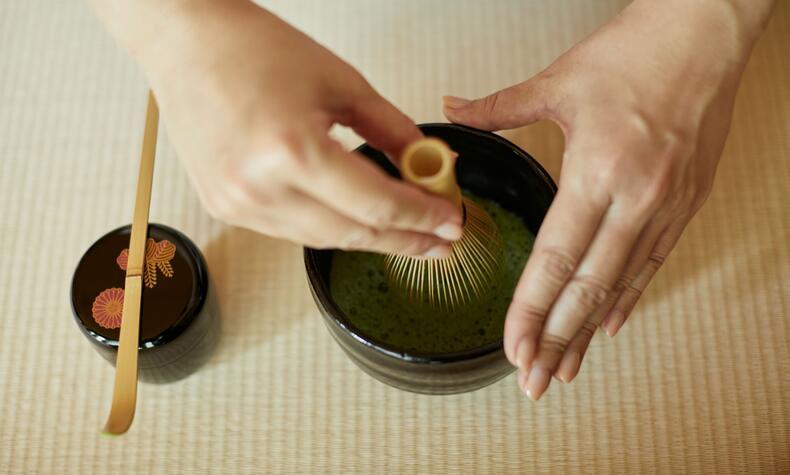
Aman Kyoto, matcha tea
Preparing matcha tea.
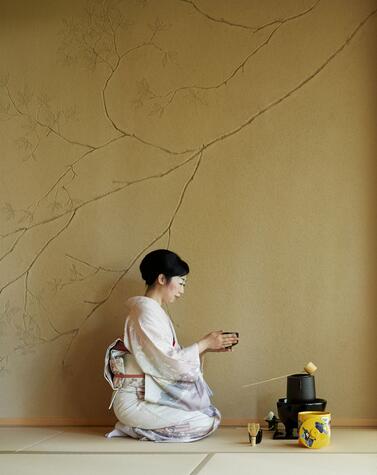
Aman Kyoto, matcha tea
Tea ceremony at the Aman Kyoto hotel.
Sen no Rikyū transformed the tea ceremony into a discipline based on seemingly simple gestures. His idea was radical: the difficulty lay not in knowing the rules, but in always following them.

Everything for a cup that will disappear

Tea arrived in Japan from China, associated with monasteries and the court. In the 9th century, it was still a drink reserved for a select few; centuries later, warriors organized contests to determine its origin and placed bets while displaying expensive imported utensils.

From those noisy gatherings, through a slow process of refinement, a ceremony built around silence would emerge.

Sen no Rikyū, born in Sakai in 1522, minimized the spaces, favored simple utensils, and transformed the preparation of a cup of matcha into a discipline in which nothing is superfluous. The charcoal determines the water’s temperature; the flower evokes the season; the calligraphy conveys a thought; the bowl is chosen for an occasion that will never be repeated.

When asked to explain the Way of Tea, Rikyū listed seven seemingly basic rules: prepare a satisfying cup of tea, bring the water to a proper boil, evoke coolness in summer and warmth in winter, arrange the flowers as they would grow in the wild, anticipate events, prepare for rain, and attend to the guests. To those who considered this too simple, he replied that he would become a disciple of anyone who could do it consistently.

The ceremony can last for hours over a drink that is consumed in minutes. Tea was also an extraordinary means of communication between cultures. In China, the tea and horse road we follow another of its stories: that of the ancient routes that connected Yunnan with Tibet.

Aman in Kyoto
Aman, Japanese cuisine

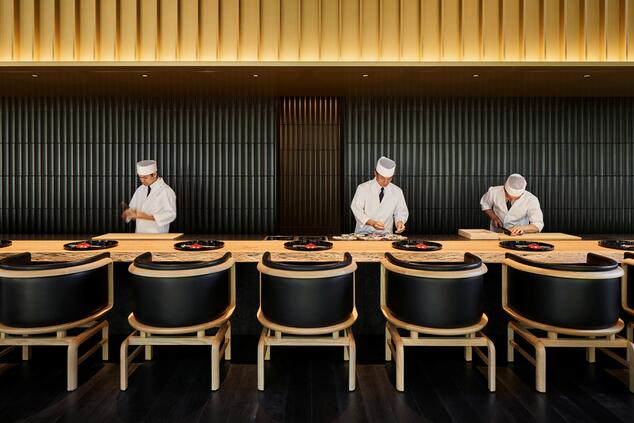
Sushi began far removed from the refined sushi bar with which it is identified today. In its earliest forms, rice and salt were used to ferment fish for months; the rice served as a preservative and could be discarded before eating. Over time, the process was shortened, and vinegar made it possible to achieve the desired acidity without waiting so long. Preservation gradually evolved into a culinary art.

The decisive change came in Edo, now known as Tokyo. In the early 19th century, vendors placed fish on top of portions of vinegared rice and served them at street stalls. Nigiri originated as fast food, intended to be eaten with the hands.

Before refrigeration, many pieces were not completely raw: the fish was marinated in soy sauce, salted, cooked, or cured with vinegar. Edomae, a term that originally referred to fish caught off the coast of Edo, eventually came to denote this repertoire of techniques as well.

Each piece still depends on nearly imperceptible decisions: the temperature and acidity of the rice, the direction of the cut, the pressure of the fingers, the amount of wasabi, and the exact moment of service.

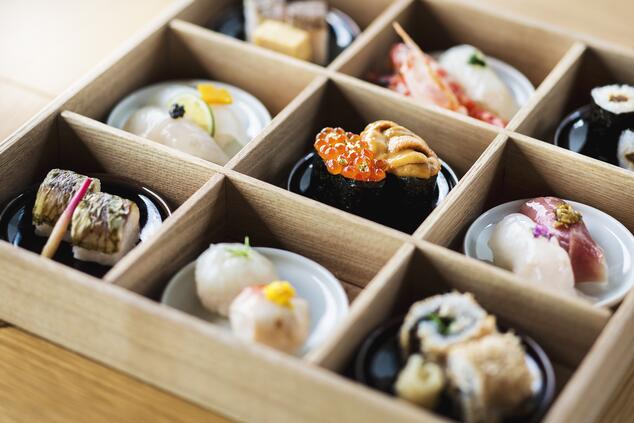
And sushi from Japan does not necessarily match the kind that has become popular in Europe. Avocado, cream cheese, mayonnaise, sweet sauces, or fried ingredients are part of adaptations that originated outside the archipelago. In Japan, the repertoire is much broader: nigiri, pressed sushi, chirashi, fermented dishes, and regional specialties.

Furthermore, sushi does not mean “raw fish”. Its defining element is vinegared rice, which can be accompanied by fish, seafood, omelet, or vegetables.
Sushi doesn't mean raw fish

The word "sushi" refers, first and foremost, to a dish made with vinegared rice. It can be served with raw fish, seafood, omelet, vegetables, or cooked ingredients. Sashimi, on the other hand, specifically refers to fish or shellfish served without rice. The confusion is understandable: outside of Japan, many of the best-known varieties have been built around raw fish, to the point where it has become almost synonymous with the dish. But in Japanese tradition, there are preparations that are pressed, rolled, fermented, or topped with very different ingredients, and some regional specialties bear little resemblance to the more familiar nigiri.

The way it’s eaten also varies. Nigiri can be eaten by hand; the side with the fish is lightly dipped, and the wasabi is usually already incorporated by the chef. The rice is not a secondary accompaniment: its temperature, texture, and acidity are an essential part of the balance of each piece.

Cottonbro
Photo: Cottonbro.
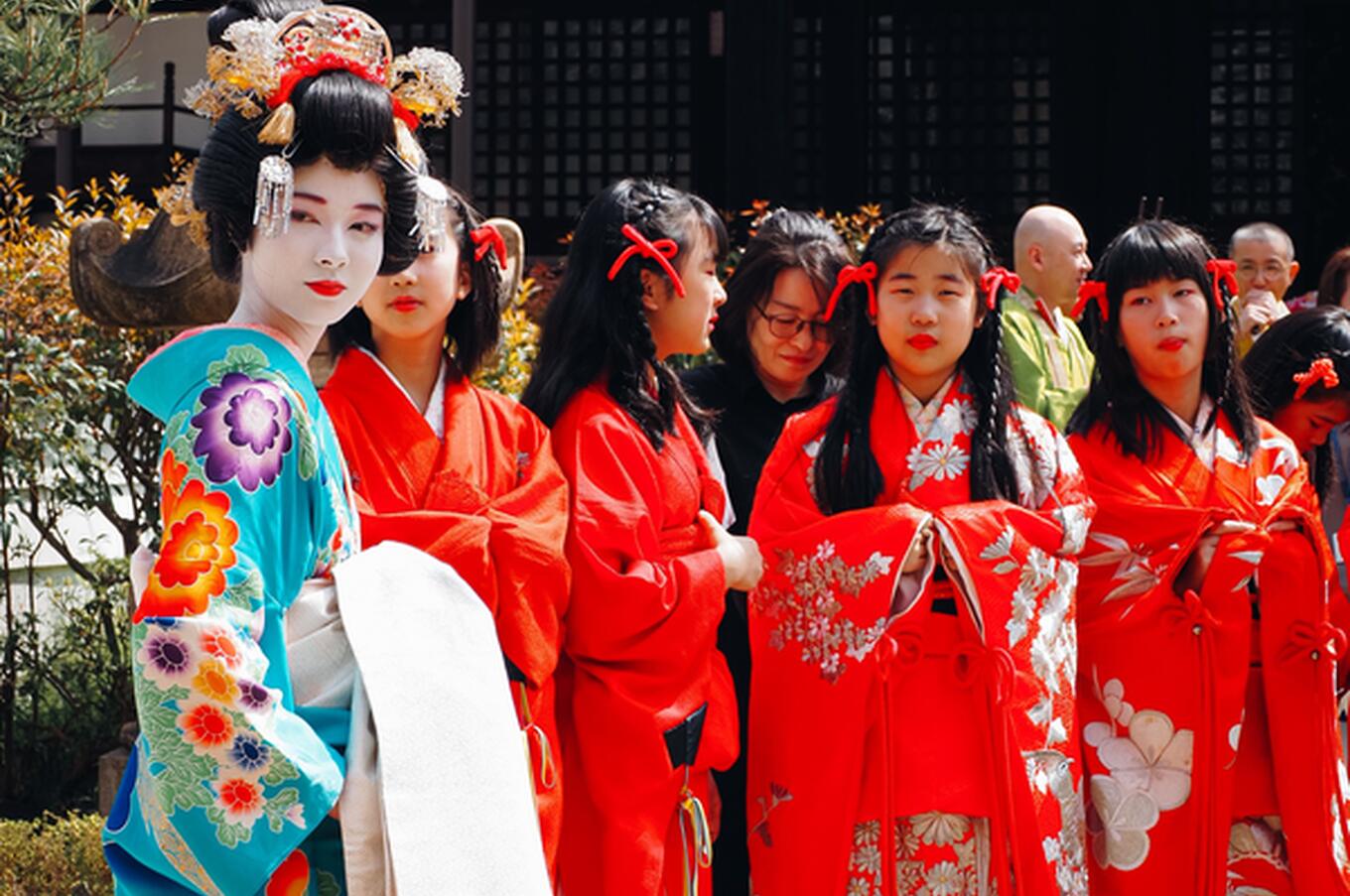
Maiko wear the seasons in their hair. Their kanzashi change with the seasons: plum blossoms in February, cherry blossoms in April, wisteria in May, and maple leaves in the fall.
Artemioz

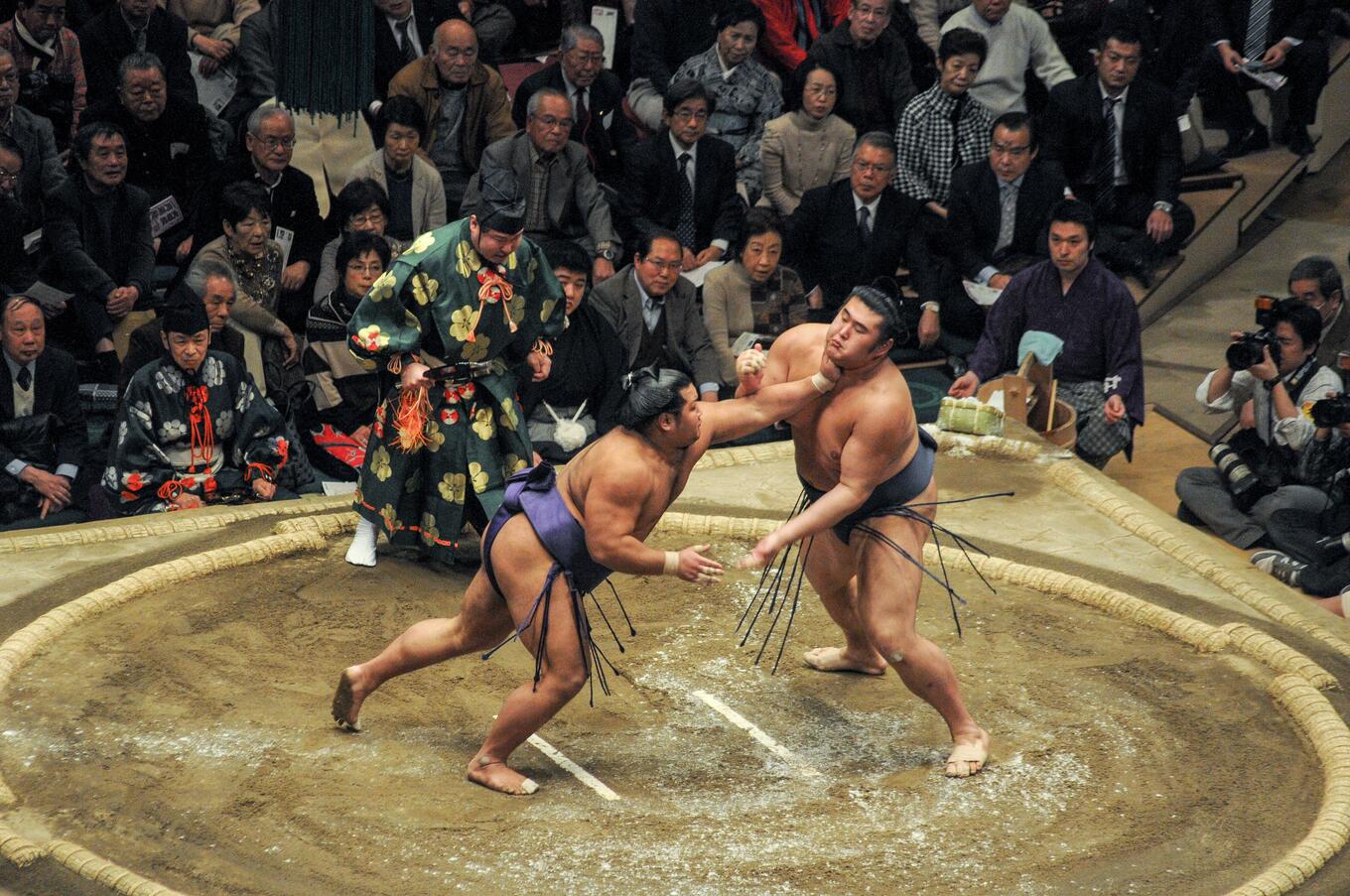
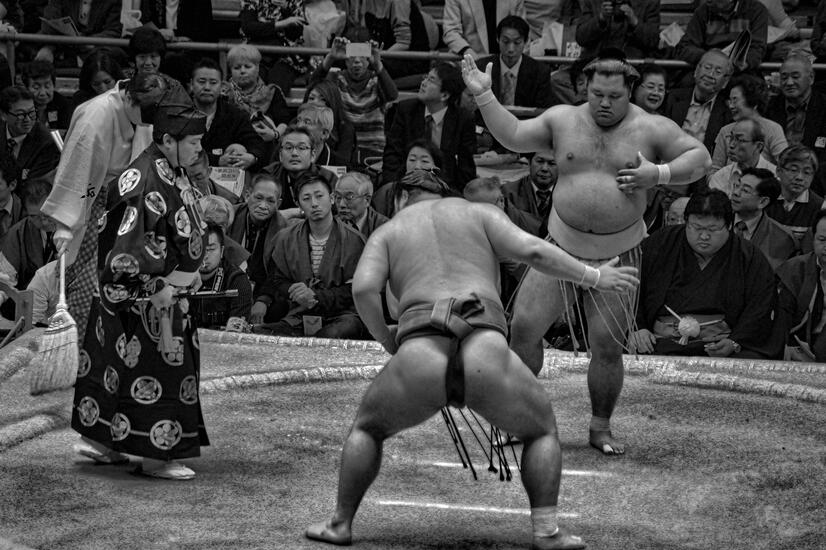
Two wrestlers step onto the dohyo and size each other up. They crouch, stand up, return to their corners, throw salt, and face each other again. The wait can last up to four minutes. The match is usually decided in a matter of seconds.

In sumo, almost everything happens before the clash. The salt purifies the ring and also helps dry their hands and disinfect any wounds. The wrestlers clap to attract the attention of the gods, extend their arms to show they are not hiding any weapons, and stamp their feet on the ground.

The ring measures just 4.55 meters in diameter. To win, a fighter simply needs to force their opponent out of the circle or make them touch the ground with any part of their body other than the soles of their feet. There are no weight classes, and there are 82 official techniques for throws, pushes, takedowns, and displacements.

Outside the stadium, the rikishi live in a heya, a training house governed by a strict hierarchy. The young wrestlers get up early, clean, cook, and assist the veterans while trying to climb the ranks. The great legend was Raiden Tameemon. Between 1789 and 1810, he racked up 254 victories and suffered only ten defeats: a winning percentage of about 96%, a record that remains unbroken to this day. For nearly seventeen years, he held the rank of ōzeki. Curiously, he never received the title of yokozuna. The most dominant wrestler in history was thus left off the list of those who attained the rank that today identifies the great champions.

82 ways to win

Sumo recognizes 82 official winning techniques, ranging from pushes and throws to takedowns and sweeps. There are no weight classes: a wrestler can face an opponent who is much heavier and win the bout through technique, balance, and speed. The ring where it all takes place is only 4.55 meters in diameter.

Alan Stoddard
Photo by Alan Stoddard
Elifinatlasi
Maiko sleep on a raised pillow called a takamakura so that their elaborate hairstyles, made from their own hair, do not come undone during the night.

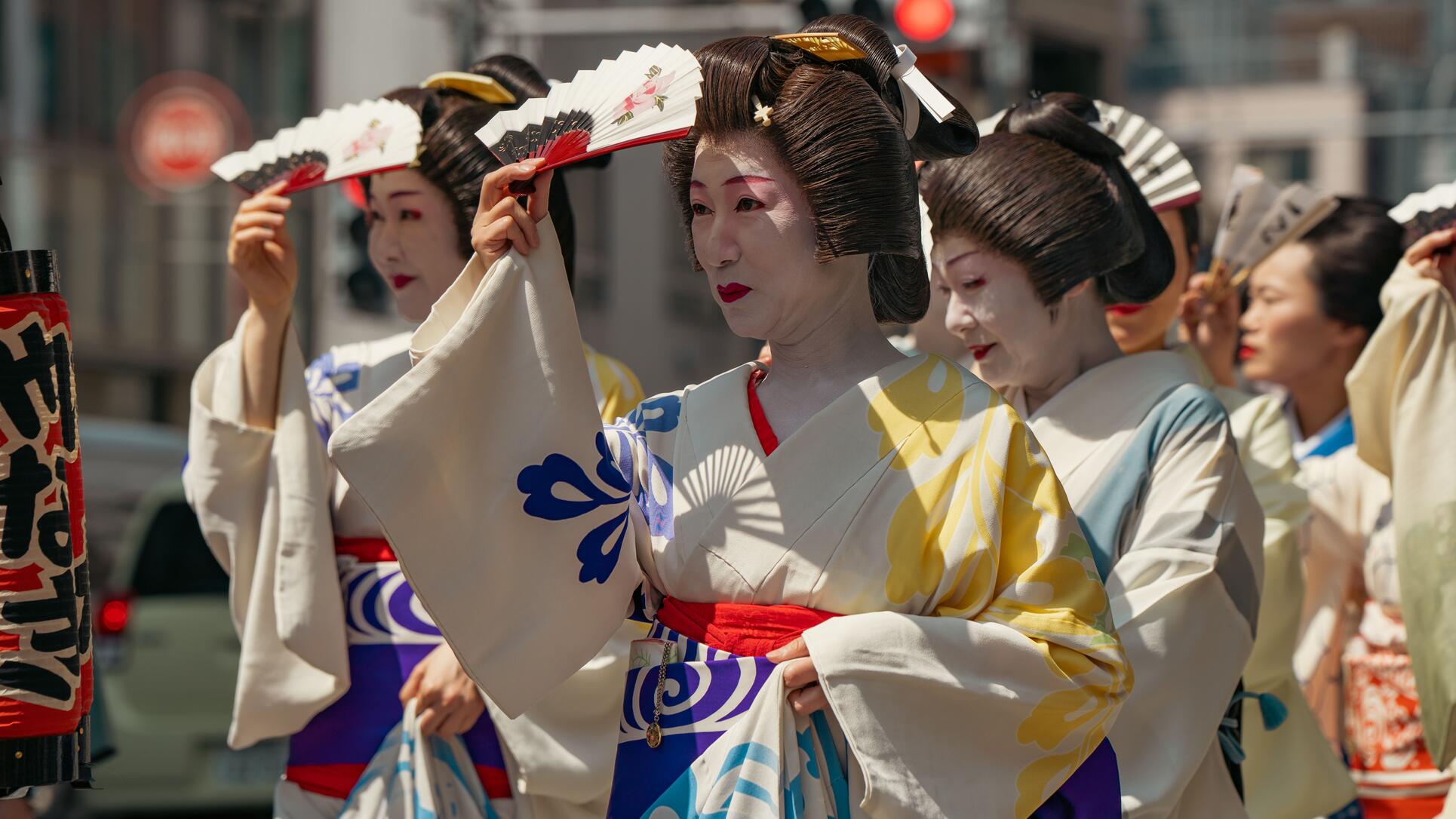
The most recognizable image is that of a young woman with a white face, a long-sleeved kimono, and an obi that falls almost to the floor. However, this figure usually represents a maiko, an apprentice. In Kyoto, a fully trained artist is usually called a geiko: “woman of the arts”.

Her training includes dance, singing, the shamisen, the tea ceremony, conversation, and etiquette. The maiko is affiliated with an okiya, the house that organizes her training and engagements, and she also learns by observing the more experienced geiko.

Her training continues even while she sleeps. The maiko wears intricate hairstyles made from her own hair and visits the hairdresser about once a week. To keep them from coming undone during the night, she rests her neck on a takamakura, a small, raised pillow that keeps her head off the futon.

The kanzashi, the ornaments in her hair, also change according to the calendar: plum blossoms in February, cherry blossoms in April, wisteria in May, or maple leaves in the fall. The hairstyle thus becomes a way of marking the season. When she completes her training and becomes a geiko, her appearance becomes more understated. The obi is shortened, and elaborate hairstyles are often replaced by a wig. She no longer needs to visually demonstrate her training process: her authority lies in her mastery of the arts and her ability to navigate every situation.

The aesthetic of maiko and geiko has also come to be one of Japan’s major visual codes, reproduced at festivals, photo shoots, kimono rentals, and role-playing experiences. Every song and every movement reactivates a repertoire learned from another woman. The body becomes an archive, but also a performer.

Share

Related stories

12 MONTHS / 12 STORIES

12

Once per month

Choose your topics

5'

Five minutes of inspiration

The day of your choice

Do you like what you are reading?

Passepartout is a magazine by  80days