The Genghis Khan Retreat: Mongolia's Timeless Past
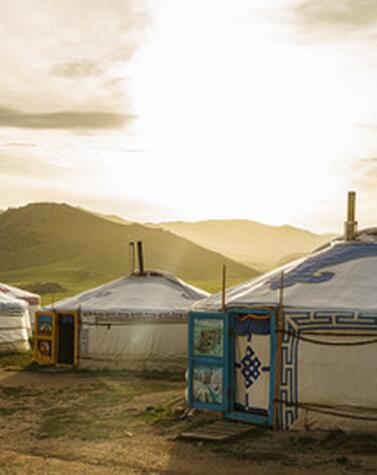
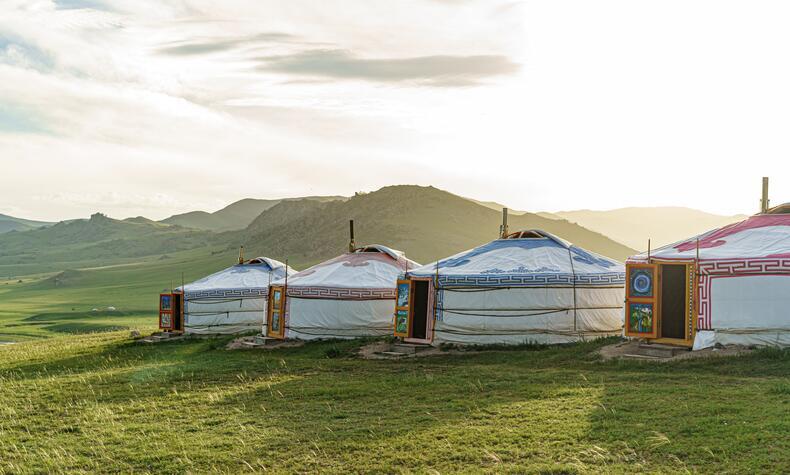
Deep in the Mongolian steppe, the Genghis Khan Retreat offers a timeless refuge of silence, wide-open space, and some of the world’s finest horsemen.
The famous French couturier first traveled to the so-called "red city" in 1966 with his partner Pierre Bergé. That trip would change their lives as, shortly after, they bought a Riad inside the Medina, called Dar El Hanch, the house of the snake.
The chaotic universe of the Medina with its tangled alleys, the souk, the acrobats, snake charmers, and dancers fascinated and inspired Saint-Laurent, who spent long periods of his life in Marrakech, first in his riad in the Medina and, later, in a villa located in the new city.
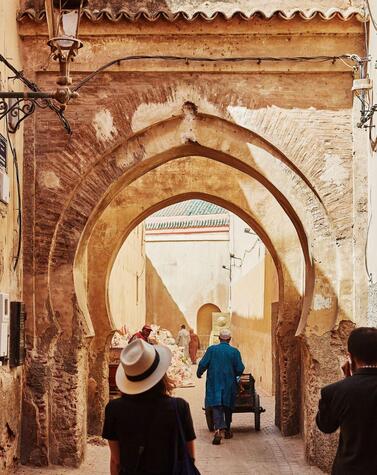
Undoubtedly, the Medina is the heart of most Arab cities. Its treasures have been protected for centuries by its thick walls, and a chaotic labyrinth of narrow streets strategically designed with the intention that the enemy would be lost in case of an attack, but at the same time perfectly organized in orderly neighborhoods specialized in different guilds of trades.
In Marrakech, we find large and elaborately decorated gates, which are those that once indicated the entrance to the different neighborhoods and can still be seen today. Within the Medina, there are different emblematic buildings: the mosque is the place of prayer within the neighborhood. The medersa, or school, the public baths, which are the place of meeting and social gatherings, or the neighborhood oven.
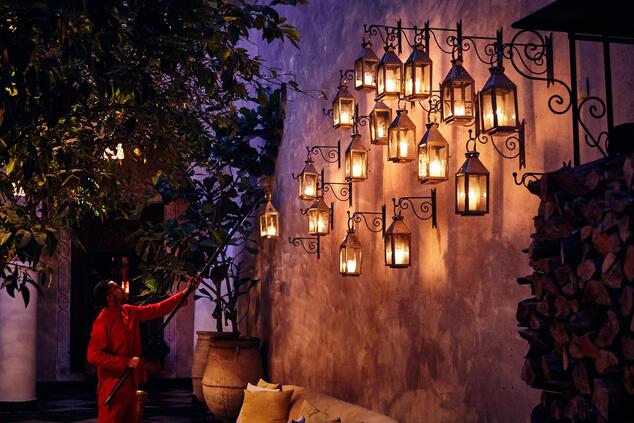
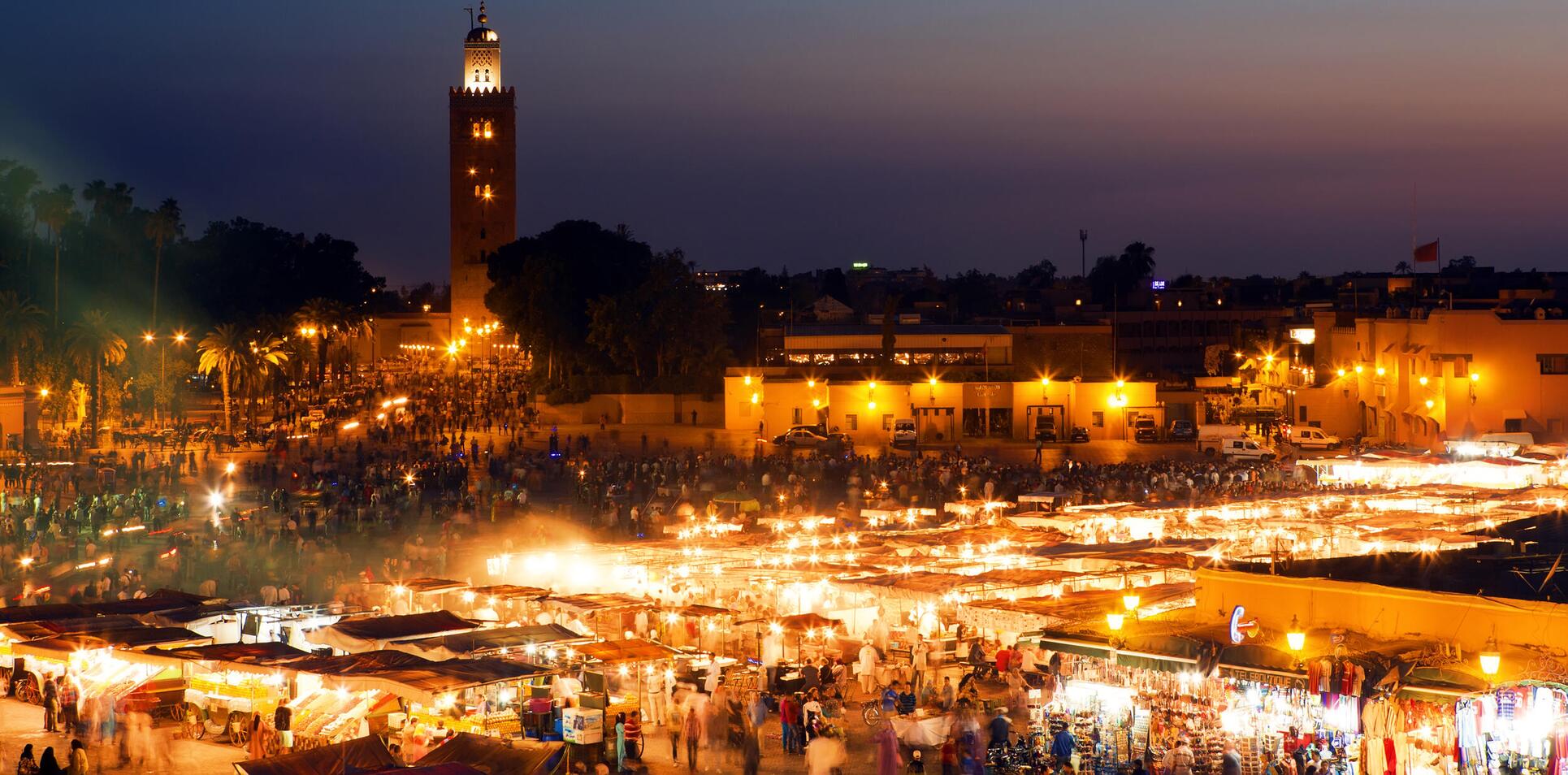
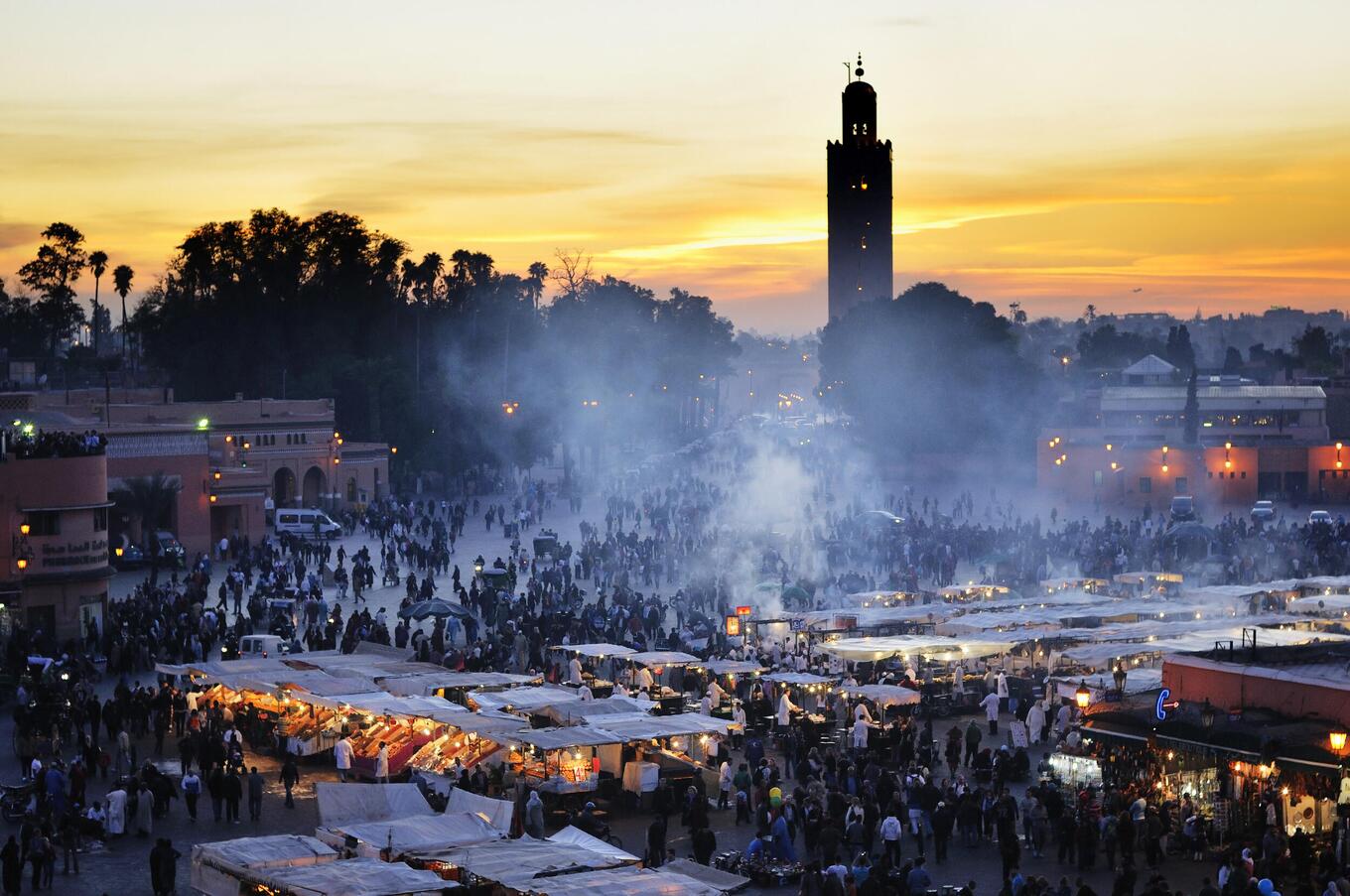
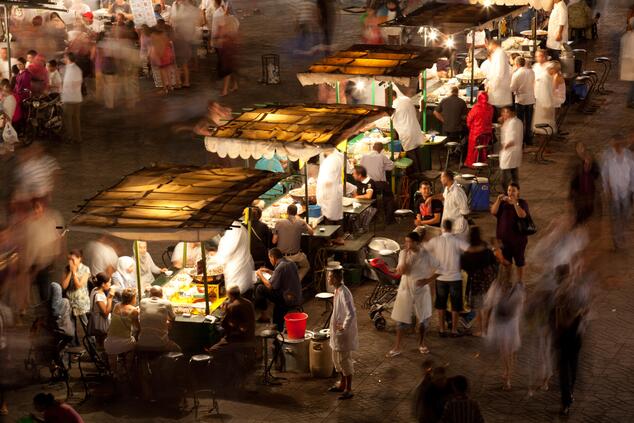
When the guilds finish their day, at dusk the Medina is transformed and people begin to flow little by little to the same place. It is the heartbeat of the Medina before nightfall. The central square Jamaâ El Fna, is transformed with an explosion of colors, bustle, people, and aromas. The heartbeat of the Medina varies depending on the time of day or the season of the year.
Before sunset, carts overflowing with fresh oranges are prepared to quench the thirst of all those who spent the day working in the heat of Marrakech, with freshly squeezed juice. A few hours later, what a few hours ago was a bustling market of fruits, vegetables, exotic spices, flowers, teas, and henna tattoo artists on the hunt for customers, is transformed once again. The stalls are dismantled to make way for portable restaurants.
The square becomes a real open-air restaurant with a capacity for hundreds of people who come after a long day. Here you can taste the famous "pastillas" one of the oldest dishes that combines sweet and savory flavors. They are shaped like a cake made with several layers of thin dough and filled with poultry, beaten eggs, almonds, onion, sugar, spices, and flavored with cinnamon.
But one of the main attractions of the square comes with the appearance of the "halaiqi" or storytellers, the last survivors in charge of perpetuating the craft of oral literature, which disappeared centuries ago in Europe, and which is based on the tradition of telling magical stories of adventures, travels, and unknown worlds in which good always triumphs over evil and that manage to keep the audience astonished and expectant that every day waits eagerly for a new chapter of the story. Even if we do not understand the language, the tone of the voice, the gestures, and the staging make it worthwhile to immerse ourselves for a few minutes in the ancestral fantasy of the stories of the "halaiqi".
UNESCO declared the Jemaâ el-Fna Square in Marrakech a World Heritage Site, not for its architecture or monuments, but for being one of the only places in the world where the tradition of performing the ancient oral narratives is maintained.
The word Riad, meaning garden in Arabic, is the name given to the traditional Moroccan house, usually with two or more floors around a courtyard containing a fountain. The riads were the stately homes of the city and belonged to the richest citizens, such as merchants and courtiers.
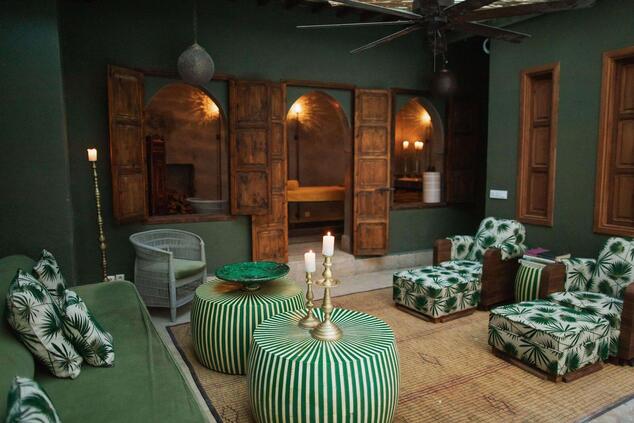
The riads are oriented inward, which provides privacy for the family and protection from the Moroccan climate. They are characterized by a garden or inner courtyard placed in the center and the absence of large windows on the exterior walls. In the central garden of traditional riads, there are often orange or lemon trees or a fountain, and the walls are adorned with plaster and colorful tiles.
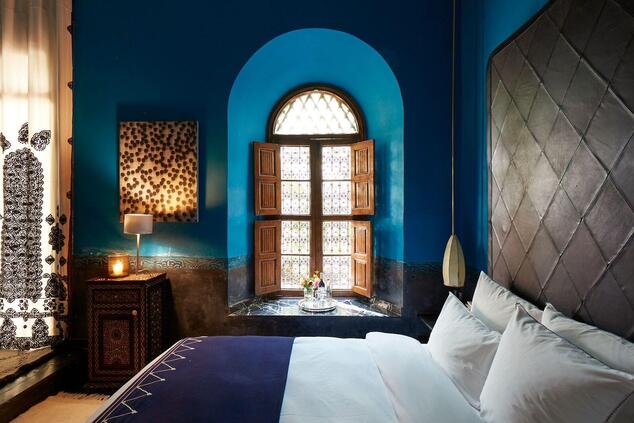
Today, many of Marrakech's riads have been converted into luxury boutique hotels where guests can experience a Thousand and One Nights style. One of them is La Sultana, a Riad hotel located in the Kasbah quarter, at the foot of the Saadian tombs, and just minutes from Jemaâ El Fna square in Marrakech.
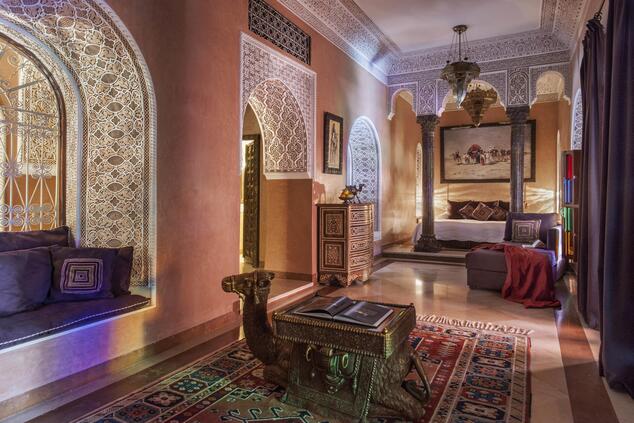
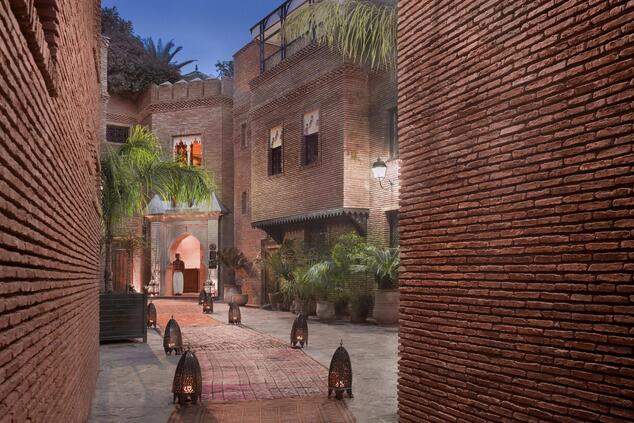
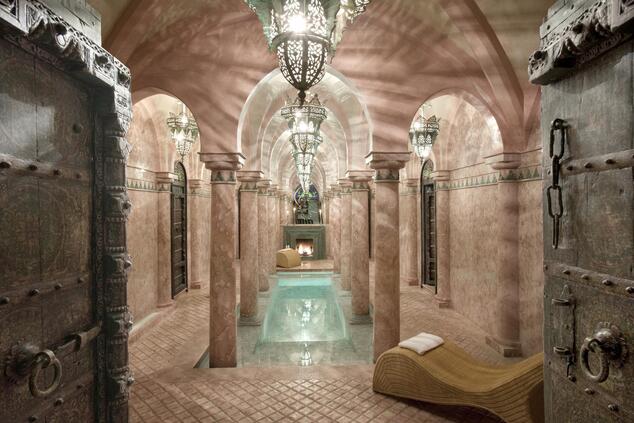
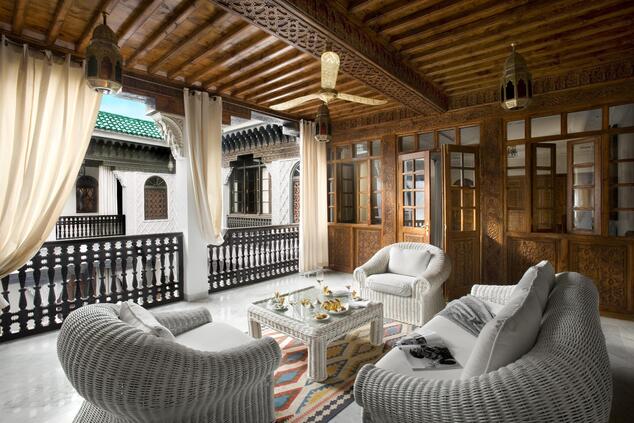
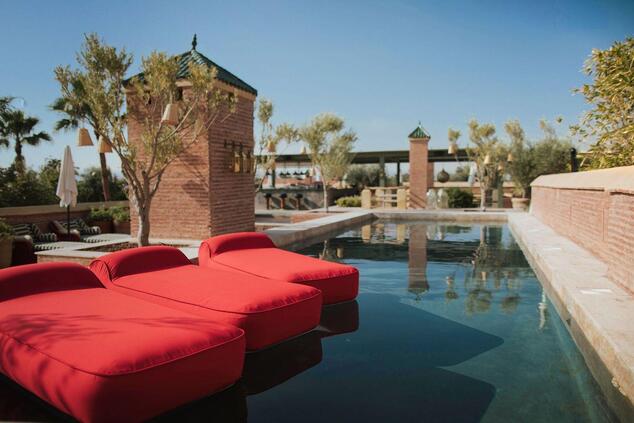
In the Mouasine district of the Medina, El Fenn, a word meaning "fresh", is another luxury Riad characterized, among other things, by its leather floors, its important collection of modern paintings, and its leafy interior garden. From its rose-filled terrace, you can enjoy spectacular views of the Kotoubia Mosque and the Atlas Mountains.