Carlo Cracco and the new identity of Italian cuisine
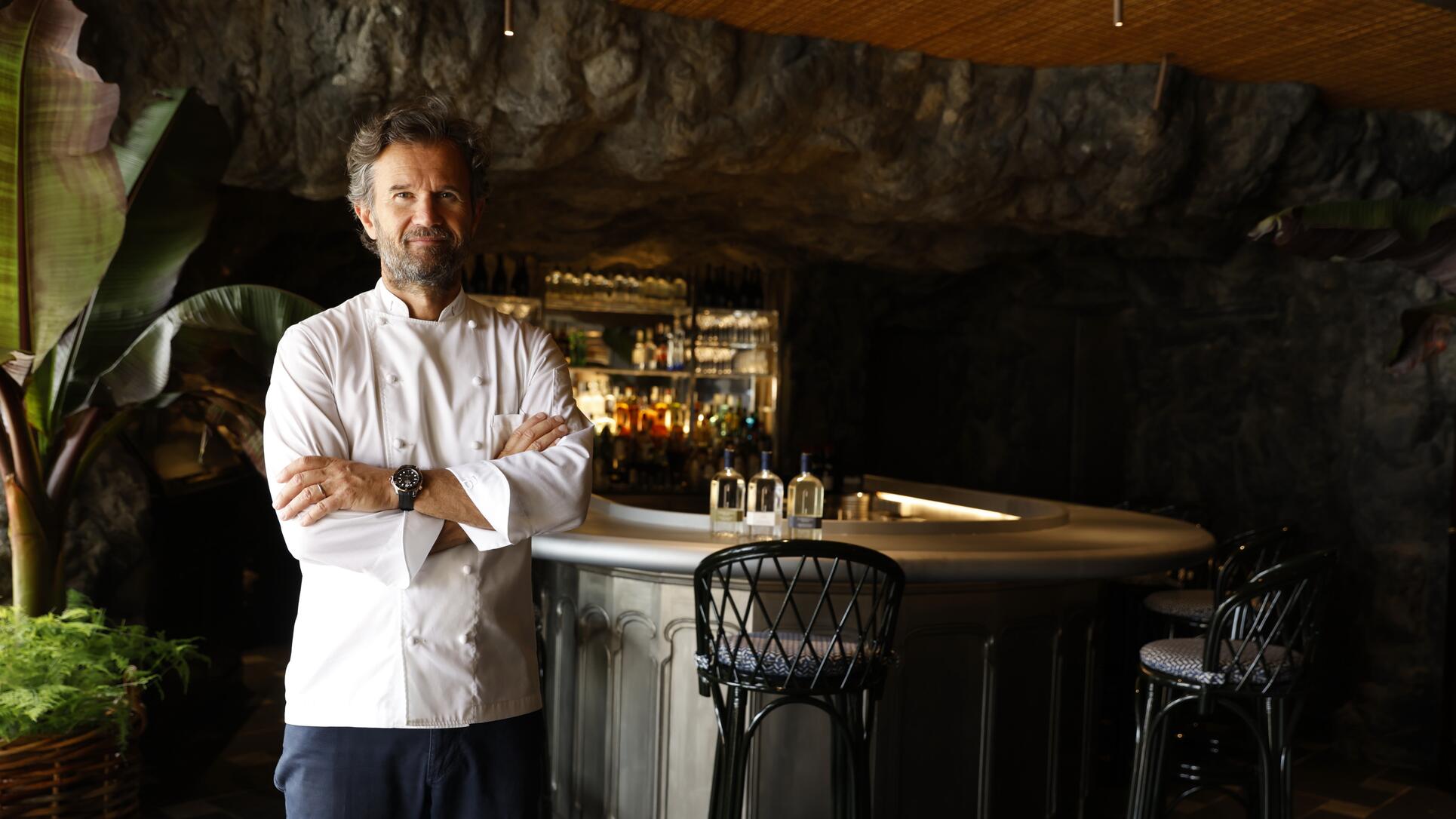
With his memorable appearances on Master Chef and the Dinner Club series, Carlo Cracco is among Italy's best-known celebrity chefs. But with his place in Milan, which is a bar, bistro and starred restaurant, he is also an entrepreneur attentive to the present of his industry, of which he has been an active protagonist since 1997, when he obtained his first Michelin star
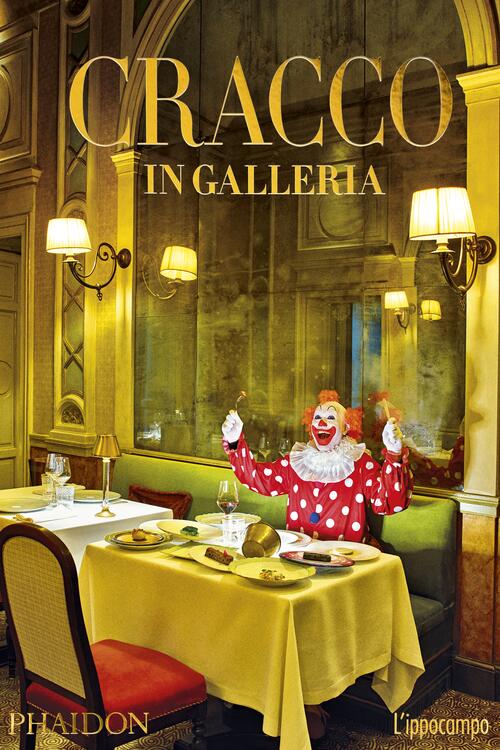
Now he is in bookstores with Cracco in Galleria, in collaboration with Toilet Paper (Ippocampo Edizioni), and he is preparing to light the fires in the kitchen of Corinthia, the new five-star luxury expected in Rome in 2026. We met him to learn about his story and that of his most famous dishes, his idea of tradition and his vision of the future of cuisine in Italy.
Where did your love for cooking come from?
From curiosity. Ever since I was a kid, I was always looking for something that would allow me to go off and find out what was going on behind the scenes. Food used to be more traditional, but it still gave you a chance to travel, to see, to know.
"What are you going to do in Milan?" people asked you when you left Vicenza forty years ago. Did you find what you were looking for?
Milan is the place of opportunities and challenges. It challenges you, and if you are good at it, it gives you the chance to grow and go your own way. I went there to learn, and because Gualtiero Marchesi was there. Then I moved abroad to have other experiences, but when I decided to come back to Italy, it was natural to choose Milan. That's where I wanted to be, more than any other place.
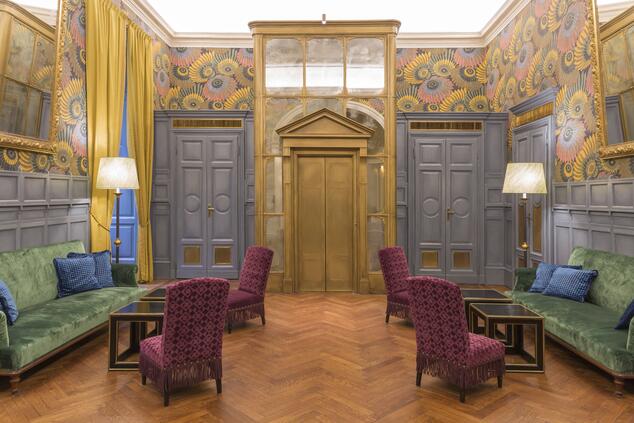
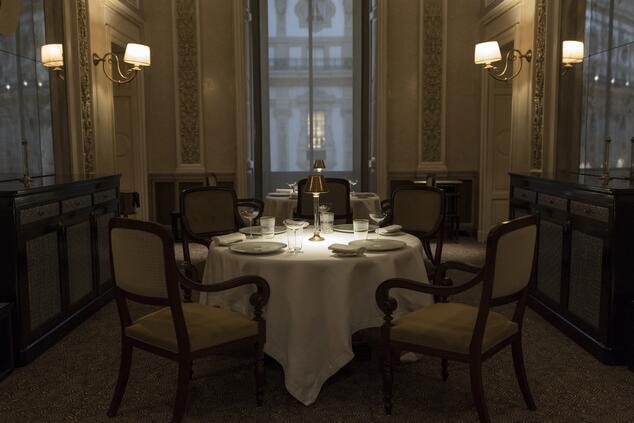
The book Cracco in Galleria is a tribute to the culinary vision of Carlo Cracco and his restaurant, located in the scenic Galleria Vittorio Emanuele II in the center of Milan. It tells the chef's philosophy through recipes, images and insights that reveal the restaurant's gastronomic identity: a contemporary cuisine that dialogues with the Lombard capital, its history and the aesthetic rigor that characterizes Cracco's style. A privileged window on his way of thinking and constructing dishes.
How do your dishes come about?
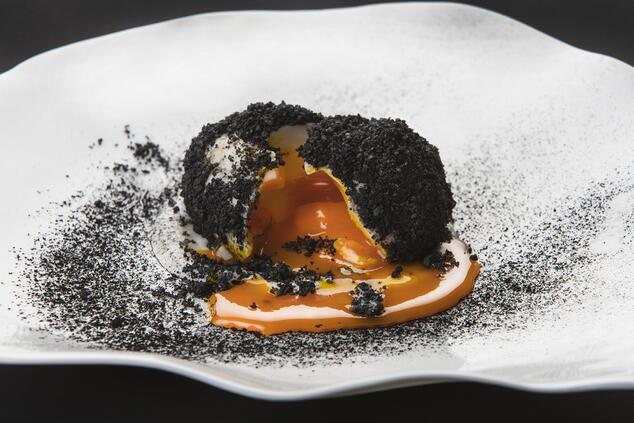
Each one has its own story. For example, the marinated egg is the fruit of a particular period. I had just arrived in Milan, where there was a great international ferment with Ferran Adrià's molecular cuisine. A signature cuisine was being defined, and every chef was looking for his or her own identity to keep up. At that time I tried my hand at egg because it was an ingredient I had always liked and was familiar with. I could challenge myself, go beyond tradition and everything that had been seen before. Then when you find your own vision, so many other ideas are born, like flourless pasta.
And the caramelized Russian salad?
At that time I was the chef at the Peck restaurant in Milan. Russian salad was never to be missing from the menu. But, let's face it, it wasn't that special; to me it was a dish from the 1970s that had had its day. And it took a lot of work to reduce the vegetables to equal-sized cubes. I wondered who still wanted coleslaw. But woe betide me if I asked that question: they looked at me ruefully. In fact, someone said to me, "If one day you invent such a dish, you will go down in history." And there the challenge was born. Since we couldn't change the recipe, we tried to change the rest and serve it differently: only thirty grams (the right portion) between two discs of isomalt (a sugar substitute that remains elastic), to be taken with the hands. It took a year to get it right, but today it is a classic in our kitchen.
What is your favorite ingredient?
(Think about it a bit, ed.). Rice, because I make risotto with it, which represents the world I grew up in. It is a versatile dish that, although in a different way, is made both at home and in restaurants. Then, wave rice is one of the few recipes that never wanes. It is an example of how modern we Italians have always been in cooking, especially in Veneto and Lombardy.
What do you eat at Cracco's house?
Whatever happens. Definitely a lot of vegetables, because we take in far too much protein. If I can, I try to help in the kitchen and involve my children (he has four, ages 11 to 23, ed.). They know they make a living from my work as a chef, and they are curious to understand how it works.
Do you eat together?
When I can, always. We have dinner early, around 6:15, so that everyone is there.
How do you see haute cuisine in the next five years?
I say what I would like to see. I would like to see it become a more strategic factor for tourism and hospitality. Today restaurants are treated like any other public establishment, like a bar, a sandwich shop, a pizzeria. There is a lack of investment, a vision, we are not considered a real industry. However, if there is the G7 in Italy, then it becomes a priority to find a chef to boast about with international delegations! We need to make it a competitive industry and a boast, while now there are objective problems such as the lack of young people who, unlike my generation, do not see working in haute cuisine as an opportunity.
Why, what has changed?
The model of the nice restaurant where you eat well and where there is an established chef works partly because chefs have come out of the closet. Before, they were relegated to the kitchen, subordinate to the patron and maître; with Gualtiero Marchesi things changed, and they began to become entrepreneurs, opening their own restaurants until they became stars to the nth degree with television. But after covid the trend has changed. Young people think that cooking is tiring work, they are not attracted to those rhythms, the commitment required, the low salaries at the beginning of the career. It may be tiring, but it's a wonderful profession because you're in contact with people, and it's full of opportunities for those who can seize them. Unfortunately, today I see it at risk unless new resources come in.
How influential is haute cuisine in the evolution of Italian cuisine?
Italian haute cuisine does not exist. We don't have the Chambre Syndicale de la Haute Cuisine, like in France. But we have helped it grow from north to south, from east to west. In general, catering has grown and haute cuisine has also contributed to its evolution. But it is not enough. We're all good, we're all beautiful, we're all cool... but you have to work as a team to get results, and that's not really an Italian gift, although I have to acknowledge that all chefs have embraced and supported the candidacy of Italian cuisine as a UNESCO heritage site. A boast for everyone, but then you have to think about the next step.
You will soon open your restaurant at the long-awaited Corinthia hotel in Rome. What style does he intend to propose?
Rome, which I love, has a very deep-rooted popular cuisine. Nonetheless, it offers room for interpretation. We will try to stay tied to the territory but with our own style. We are in the realm of the fifth quarter, so there is no shortage of ideas to go deep in the study of typical ingredients.
Will you also make carbonara and cacio e pepe?
Surely, they are quick dishes, which we will put in the bistro.
Where do you like to travel?
Where I have not been, so everywhere. I had set a goal to visit two or three new countries every year, but that seems like a pipe dream at the moment.
What do you like to do when you travel?
Getting to know the place where I am, understanding how the food is, the influences, what the people who live there love, and all the behind-the-scenes stuff.
How important is gastronomy to you in a trip?
It depends. If I find something good, I'm happy, but I'm happy even if I don't find it. I am sure in Japan I will enjoy tasting and discovering their cuisine; if I go to Buthan, food will not be my priority. That said, it is still interesting to understand what people eat, and how they do it.
With the series Dinner Club you have traveled the length and breadth of Italy. Is there any dish that has stayed in your heart?
In general, the thing that has impressed me the most is the people, because regardless of tradition and technique, they make a difference about the food. Specifically, I was enraptured watching Sardinian women preparing culurgiones as if they were ten-carat diamonds. That's when you realize that tradition is in their hands: it's not the culurgiones, it's the people who keep making them. And by the way, the ones I ate there are unique, unrepeatable.