Ignacio Pereira: The loneliness of crowds
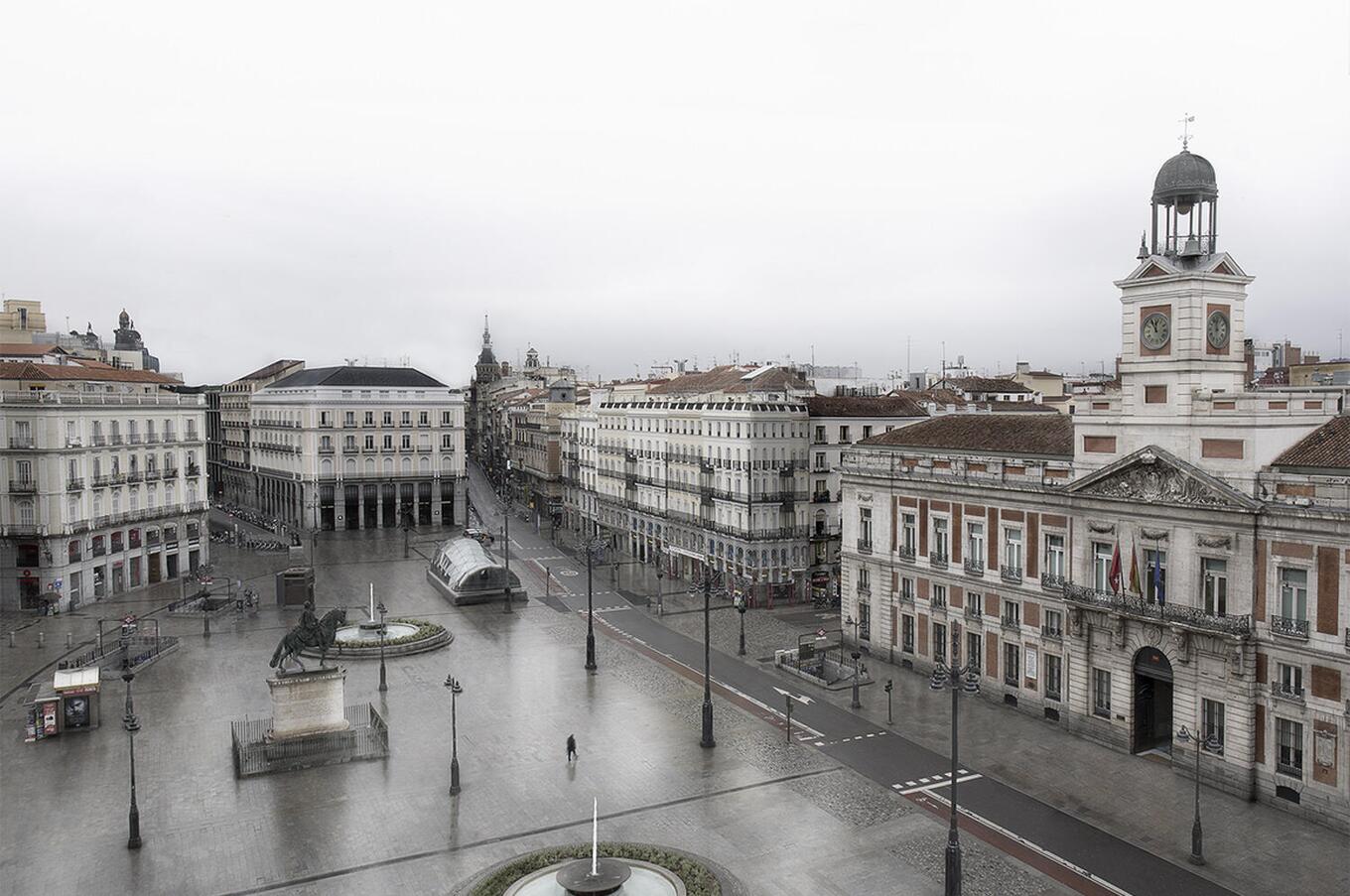
Ignacio Pereira — interior designer, advertising creative, and photographer — won the Best Visual Story Award at PhotoEspaña 2018. Here, he talks about urban loneliness and the power of the individual — themes he has explored through his acclaimed series of photographs of iconic landmarks, emptied of the crowds that normally fill them.
When and how was the photographer's side of Ignacio Pereira born?
Few photographers start out as professionals. Artistic photography often arises from different factors. I worked in advertising, but I’ve been surrounded by photography and film my entire life.
By chance, in 2014, I started to go out in my spare time to take pictures of Madrid. I love urban travel and big cities, but I’m equally drawn to calm and quiet.
Pulling those two ideas together, I started experimenting with clearing people out of small spaces where they’d normally be in the way. I completed the first photography project in Madrid. A colleague at the ad agency I worked for helped get my work some media coverage, and that’s how it all began. My first exhibition was in 2016, and that first report had many media repercussions.
And that's when the travels began...
Yes, seeing how well the project had been received, I went to London to shoot a second series. I shot Trafalgar Square, London Bridge, and the British Museum — and I loved every minute of it, because London is a city I adore.
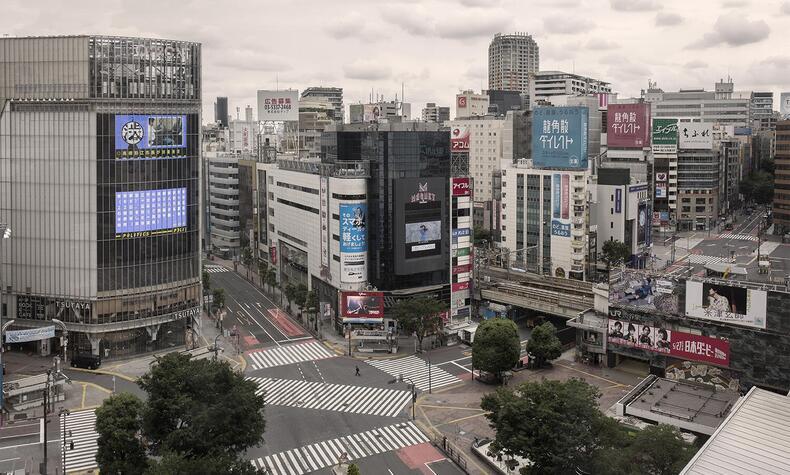
After London, I went to Tokyo. It’s an ode to consumerism. In Shibuya, the project was also very nice. Then I went to New York at Times Square, the Brooklyn Bridge, and Central Station. Then Istanbul, then Rome, and then Pamplona, where I photographed the Running of the Bulls — without the crowds.
What kind of spaces do you prefer to photograph in big cities? What is it that makes you choose a specific place to create one of your works?
It has to be an iconic location — somewhere instantly recognizable, heavily touristed, always packed with people. And then use photography to tell the story of that place.
In your photos, a person usually appears...
A photograph without anyone means nothing, but that one person — whoever appears in my photos — is what gives the whole thing meaning. If you leave a protagonist who is doing something, heading to the store, rushing to class, or cycling past in a blur, for example, the photograph comes alive. It goes from a still image to a story — one that says exactly what I want it to say.
And what is it that you want to transmit through your photographs?
That’s really the whole point: in big cities, we see crowds, but we miss the individual. We see people moving, all hustle and bustle — but if you can isolate a single story, something powerful emerges.
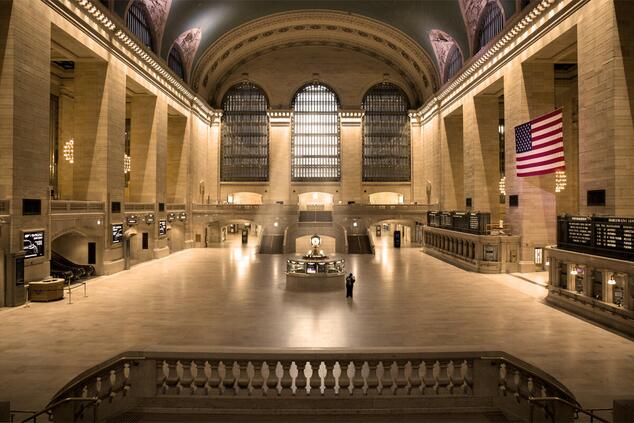
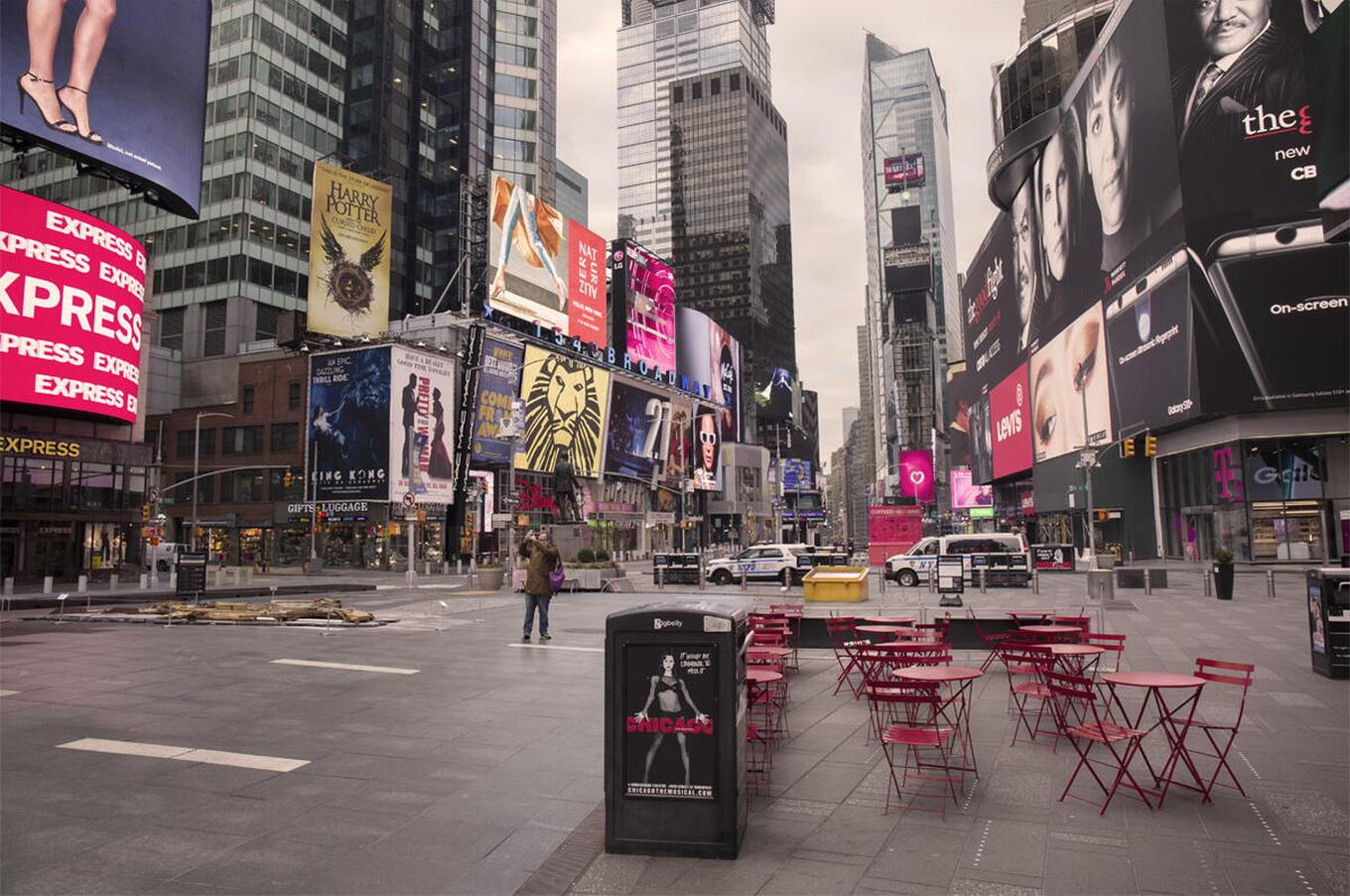
In my photos, I want to convey the loneliness of the big city. You can be surrounded by many people and feel very lonely, and that concept is best understood in New York.
- Grand Central Station in New York. —
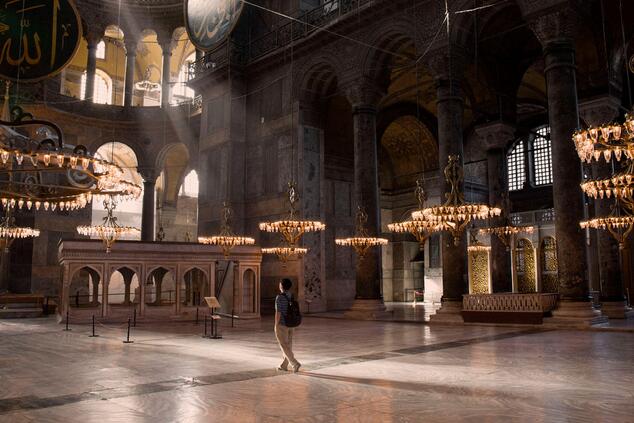
- Hagia Sophia Basilica in Istanbul. —
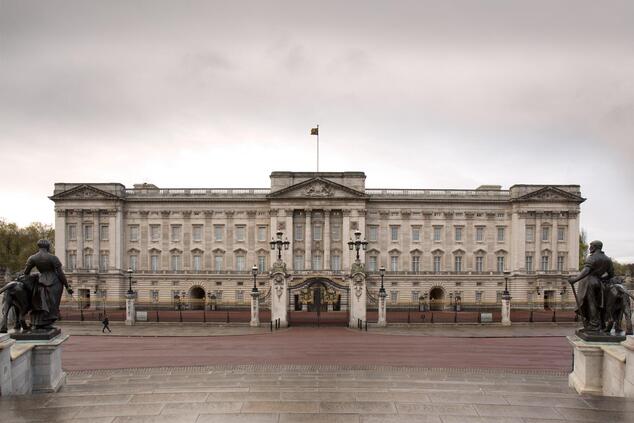
- The solitary majesty of Buckingham Palace in London. —
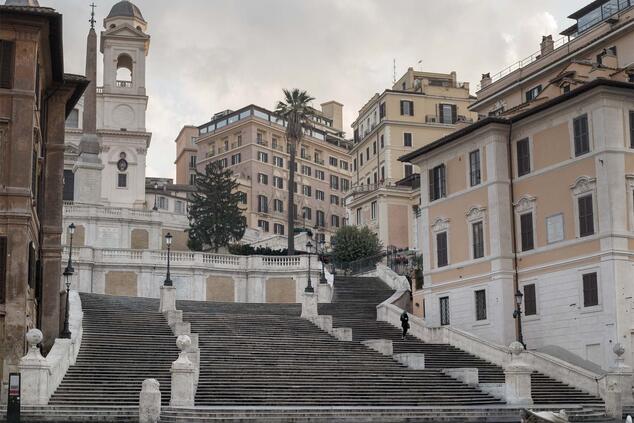
- The iconic stairs of Piazza Spagna in Rome, empty. Photos: Ignacio Pereira.
Most of your exhibitions have the word “Solitude” in the title, what meaning does this word have for you?
For me, there are two concepts: Chosen solitude — what we traditionally think of as solitude — is wonderful. We all need time to be with ourselves. For me, it is very important. I need my own time and space to think. Then there’s the loneliness people don’t choose — an imposed isolation that’s all too common in 21st-century cities.
What is the process of elaboration of each of your photographs?
Before I travel, I do a lot of research on the place. In Shibuya, for example, I spent a month ahead of time watching the city’s webcams, studying the traffic patterns, the crowds… Though you can never plan for everything — once you’re actually there, the surprises, good and bad, always find you. I remember once in St. Peter's Square in Rome, they were putting up the Christmas tree, and there was a huge crane, and I couldn't take a photo.
Once there, I can come home with 2,000 shots — that happened to me in Japan — and end up keeping about twenty to work with.
What are the main technical challenges?
Light is always a challenge. I prefer to photograph on cloudy days. Sunlight creates harsh contrasts and deep shadows that are very hard to balance. I don't take photos in summer. I try to take photos on weekdays at less crowded hours, and always at sunrise or sunset.
What has been the most difficult photo and why?
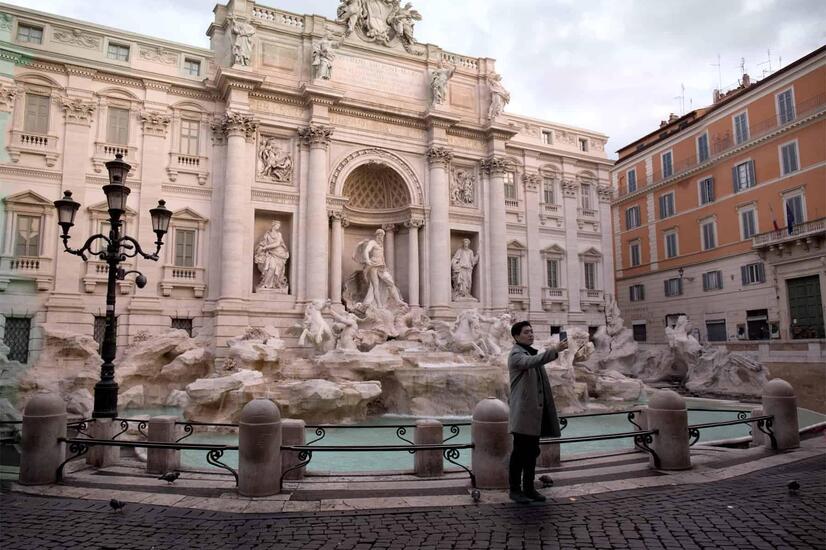
Without a doubt, the Trevi Fountain in Rome. It’s in a very tight space, and it was quite a technical challenge to use a wide-angle lens and still capture the full grandeur of the fountain — on top of it always being packed.
Which photo are you most fond of?
One of Times Square. I spent two weeks in New York going there every single day, but I couldn’t find the right moment or the right person for the shot, and and then at the last moment, everything clicked into place. I published it, it appeared in a TV report, and it turned out that the "protagonist" that I left in the photo recognized himself in it. It was a man from Malasaña who contacted me through Instagram and told me: "Hey, you won't believe it but the one in the Times Square photo is me..." I met him and gave him the photo as a gift. That’s why this photo means so much to me — it’s all about the story behind it.
This was Ignacio Pereira’s most technically demanding shot — capturing the full grandeur of Rome’s iconic Trevi Fountain with a wide-angle lens, and doing it without a single person in frame.
When you take a picture of a crowded place and then imagine it completely empty, what do you look at?
Well, I’d say that over time I’ve trained myself to visualize a packed space as completely empty. I mentally erase everything and picture that truck going by, that couple kissing, and the delivery guy on his bike… I carry that image in my head — a rough sense of what the shot will look like and what story it might tell.
When I travel, once I have the pictures of the most emblematic places, I also photograph lesser-known spots — the ones I love most, but that get less attention — and those I tend to keep for myself, along with tighter, more personal shots that tell quieter stories.
You often travel alone. What is the best thing about this type of travel?
I travel alone whenever I can, and I find it wonderful to do so. I can move at my own pace and have time to myself. I’d encourage everyone to travel alone at least once — when you do, it’s a remarkable way to discover who you are, to miss people, and to feel missed. Once you get over the hurdle of taking a long solo trip — as I did in New York — there’s no going back.
And the message of your photographs will remain the same?
Honestly, I’d love to shoot a series as a kind of tribute. Moving from the loneliness of big cities to the solidarity we’ve been witnessing — starting with people who stayed home — and documenting how that story evolves.
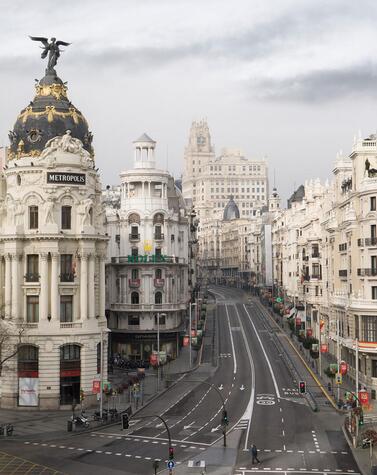
Madrid's Gran Via, Times Square, Shibuya crossing... what will be your next photograph?
I want to go to Paris in November, then Berlin, and eventually Rio de Janeiro and Mexico City.